
English Short Stories with Subtitles, by Level

Seven YouTube channels with short English stories, from A1 fairy tales with the text on screen to true stories told live, plus how to study one in 15 minutes.
A short story is the easiest piece of real English to finish. It has a beginning, a problem and an ending, it fits into a coffee break, and when you know how a tale like Goldilocks goes, you can follow it even when half the words are new. Add the text on screen and you can match every sound to a written word.
The hard part is finding good ones. Search for “English short stories for beginners” or “learn English through story level 1” and the top results come from channels that don’t say who wrote the story or who is reading it. So in November 2026 we went the other way. We opened each video below, looked at what is actually on screen, checked the subtitles and measured how fast people speak, counting words per minute from the captions. Every channel here says who makes its videos.
At a glance
- A1: English Singsing, LearnEnglish Kids by the British Council
- A1-A2: Little Fox
- A2: Vooks
- B1: storybooth
- B1-B2: StoryCorps
- B2-C1: The Moth
1. English Singsing: a fable, then you repeat it (A1)
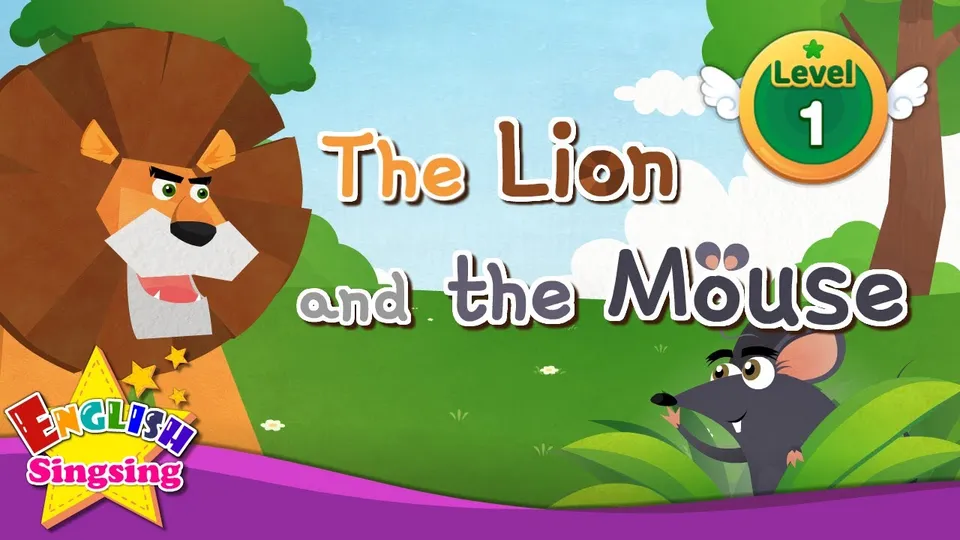
Start with: “The Lion and the Mouse” · English Singsing on YouTube
This is the slowest video on the list, about 36 words a minute. The 8-minute fable comes in three parts, and the description gives the times. First you just listen to the story. At 2:08 the story is read again for you to repeat after (“Follow after me!”). At 5:52 it is your turn to say the lines alone.
What the characters say appears in big letters on the picture: “If you let me go, I will help you one day.” The channel mostly makes songs and vocabulary videos for small children, so look for “English Stories” in the titles. It suits an adult at A1 too. Nobody is watching you talk to a cartoon lion.
2. LearnEnglish Kids: fairy tales with every line on screen (A1)
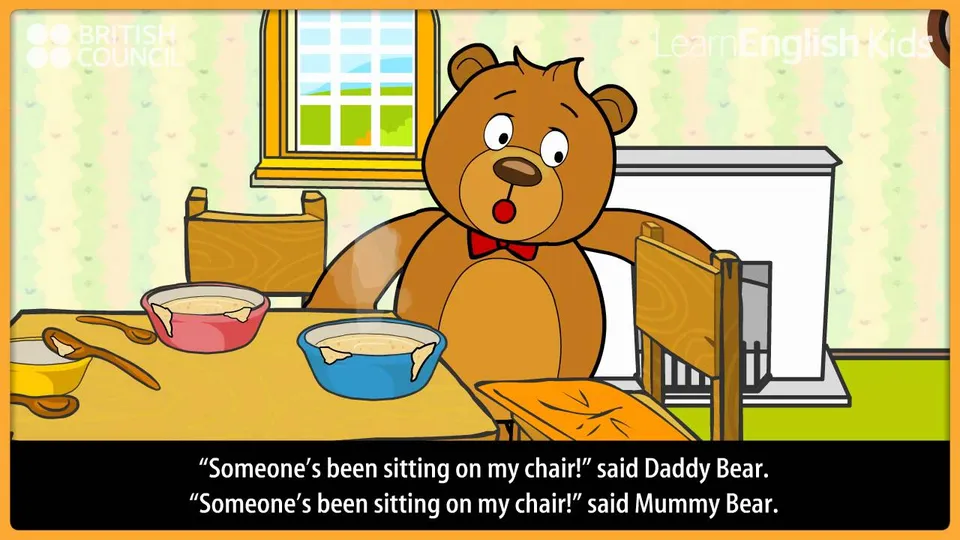
Start with: “Goldilocks and the three bears” · British Council LearnEnglish Kids on YouTube
The British Council’s channel for children has fifteen videos labelled “Kids Stories”, each between one and three and a half minutes long: Goldilocks, Little Red Riding Hood, Jack and the Beanstalk, and a few originals like “The greedy hippo”. The sentence being read sits on a black strip at the bottom: “Goldilocks was very tired. She went upstairs. ‘This bed is too hard!’” There are no YouTube subtitles, and you don’t need them.
The channel has not added anything since 2022, so treat it as a finished collection. Goldilocks has close to 14 million views and takes two and a half minutes. Watch it twice in a row and you will have the whole story.
3. Little Fox: animated stories with the spoken word highlighted (A1-A2)
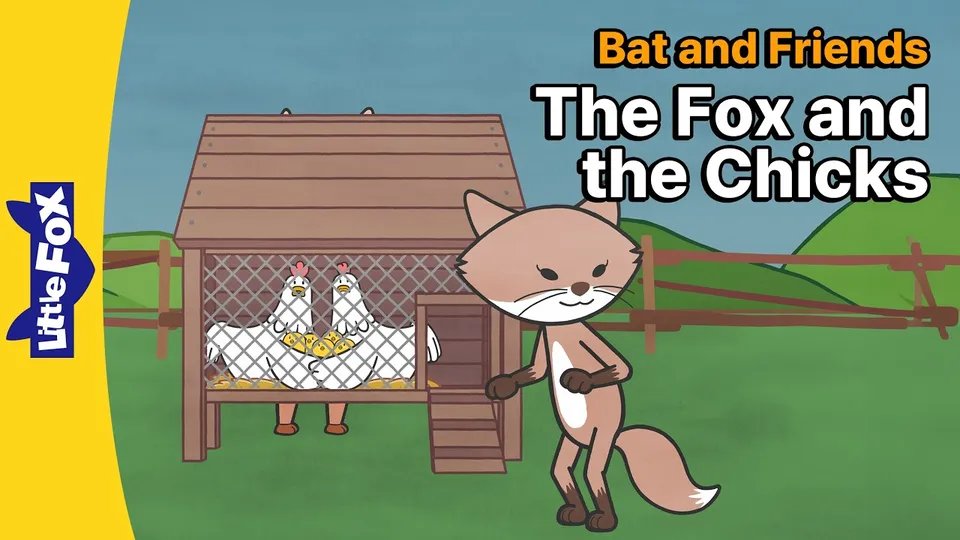
Start with: “The Chicks and the Fox” · Little Fox on YouTube
Little Fox makes animated series and retellings of classics for children learning English, and it still posts new videos, the latest in November 2026. In the narrated parts, the line appears at the bottom and the word you are hearing turns yellow: “‘The fox is coming,’ said Pig.” It is one of the best ways we found to connect a sound with its spelling, because your eyes always know where the voice is.
“The Chicks and the Fox” is a 12-minute farm story from the series Bat and Friends. Not every scene has text, so turn on YouTube’s automatic captions as a backup. When short episodes feel easy, the channel has long ones too: its full “Beauty and the Beast” runs over an hour, in twenty episodes.
4. Vooks: picture books that read themselves (A2)
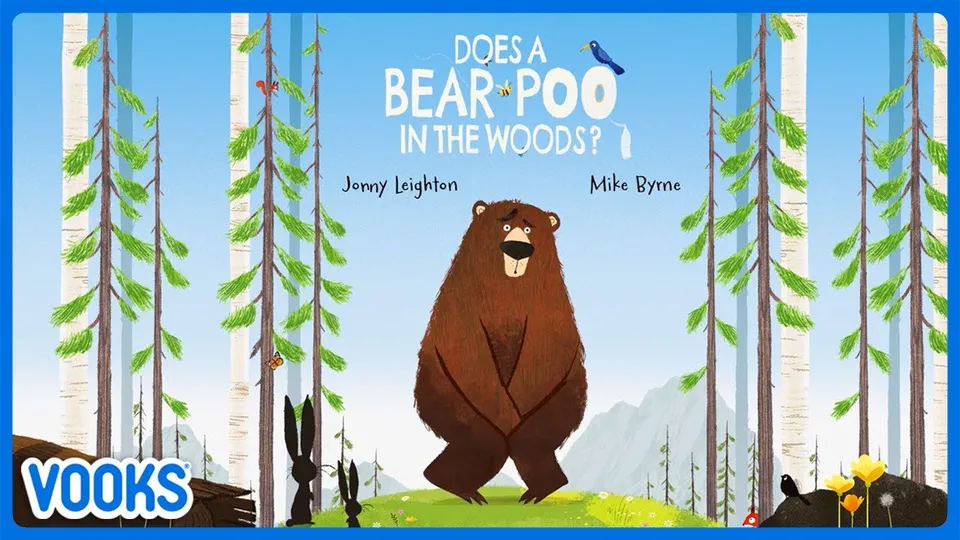
Start with: “Does A Bear Poo in the Woods!?” · Vooks on YouTube
Vooks turns children’s picture books into gently animated videos. The text of each page sits under the picture, and the part being read lights up. The narration moves at about 79 words a minute, faster than English Singsing or Little Fox but still slow, and the language is richer: “He tried to find a spot to poo behind the widest trunks.” That is real book English, with the kind of words a textbook skips.
The 7-minute story about Barry, a shy bear who can’t find a private place to go, is silly enough to keep you watching. Vooks also has its own site, but the YouTube channel is free, still adds new books and has compilations of an hour or more.
5. storybooth: true stories from viewers, animated (B1)
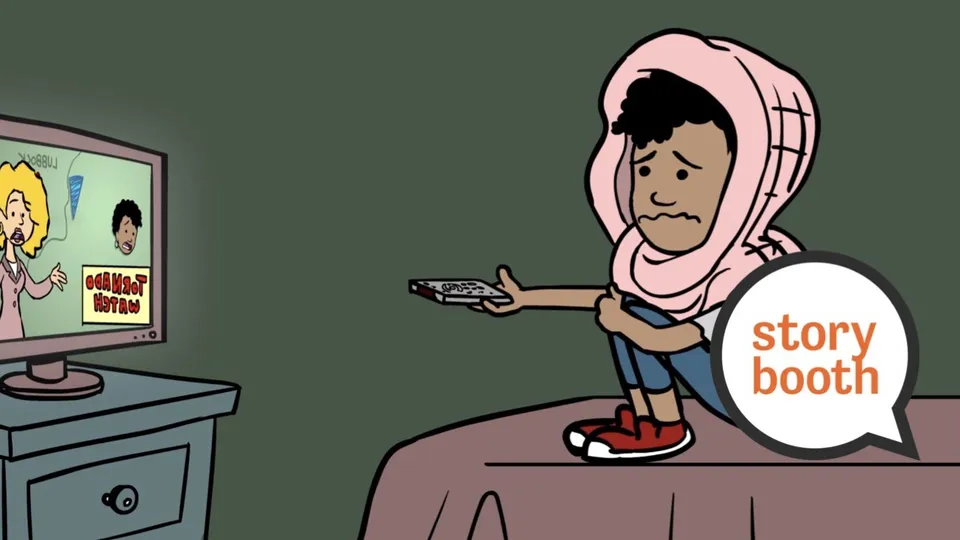
Start with: “Left Home Alone In A Tornado” · storybooth on YouTube
Here the stories stop being written for learners. People record something that really happened to them on the storybooth website or iPhone app, and the channel animates some of them. You hear the teller’s own voice at around 165 words a minute. That is fast. What saves you is the length: the most watched videos last about three and a half minutes, and the one below has English subtitles from the channel itself.
Chaun’Tovey’s story is a good first one. She is home alone, a siren goes off outside, and her grandmother calls and tells her to grab her valuables and get into the bathtub. The vocabulary is everyday, so a strong A2 learner can follow it with subtitles on.
6. StoryCorps: real conversations, animated (B1-B2)
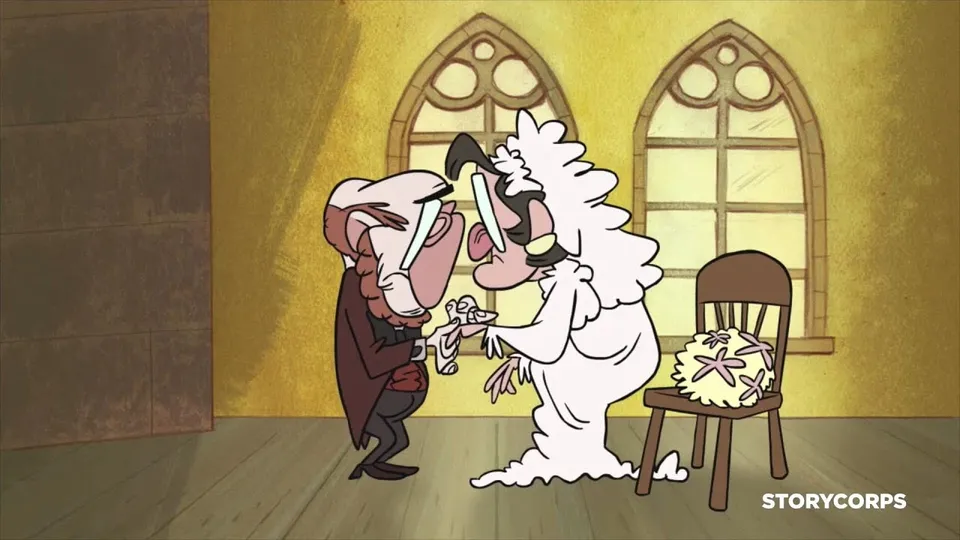
Start with: “Danny & Annie” · StoryCorps on YouTube
StoryCorps records ordinary people talking about their lives, and some of those recordings become short animated films. “Danny & Annie” is the famous one: Danny and Annie Perasa from Brooklyn remember twenty-seven years of marriage, from their first date to Danny’s last days with cancer. Six minutes long, with more than four million views.
This is unscripted English from two people talking, at about 143 words a minute. The channel provides its own subtitles, and a few lines of text on screen fill in what happened between the recordings. Listen once for the story and a second time for how Danny tells it.
7. The Moth: stories told live, without notes (B2-C1)
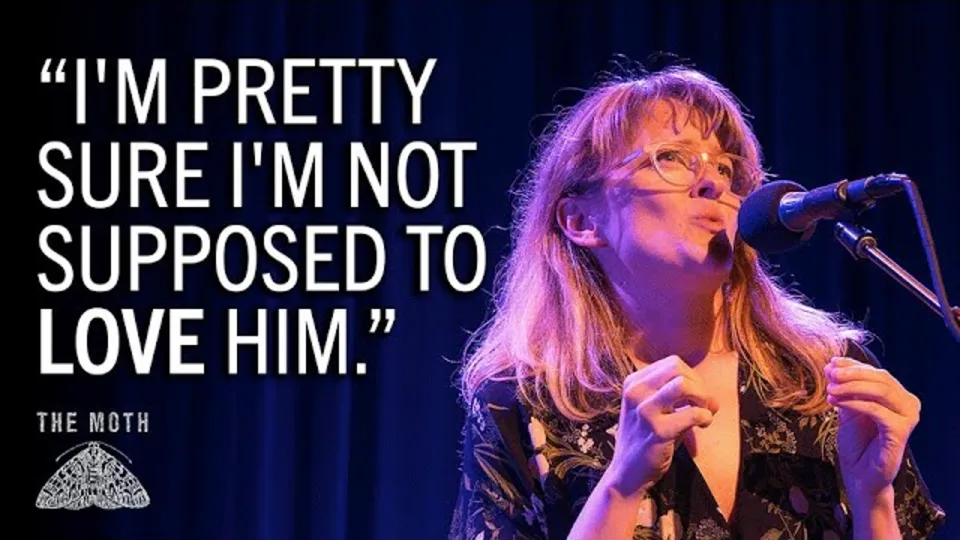
Start with: “I tried ‘casual’ dating after my divorce” · The Moth on YouTube
The Moth is a non-profit that has put ordinary people on stage since 1997 to tell one true story from memory. On YouTube you see a person at a microphone and nothing else, so everything depends on your ears. In the story below the teller speaks at about 154 words a minute, with no pictures to help. This is where short stories meet advanced listening.
Grace Ambrose’s story is five and a half minutes: a friend gets divorced, the friendship turns into something more, and she isn’t sure she can do anything “casual”. The channel adds its own English subtitles. The most watched videos run 5 to 14 minutes, so you can take one a day.
How to study one story in 15 minutes
A short story is small enough to work on properly. This routine takes about a quarter of an hour:
- Watch it once for the plot. Text on, no pausing. You just want to know what happens.
- Go back to the lines you missed. Read them, listen again, and look up only the words that block the meaning.
- Watch again without the text. Hide the subtitles, or look away from the bottom of the screen. Notice how much more you catch now.
- Say three lines out loud. Pick lines you like and repeat them after the speaker, copying the rhythm. English Singsing builds this step into every video.
- Retell it in five sentences. Out loud or on paper. If you can retell it, you own the words.
When a channel starts to feel easy, move one step down the list. If a story loses you in the first minute, go one step up. You should understand most of it on the first watch.
Why we left out the “Level 1” story channels
Searches for graded English stories are full of channels with names like “Learn English Through Story”. Some of them have millions of views. We checked the most popular ones, and their descriptions don’t name the person reading or where the text comes from. Some stories may be original, but there is no way for you to know, and a channel built on someone else’s graded reader can vanish overnight. Every channel above says who made its videos, and the true stories are told by the people they happened to. For longer stories read aloud, see our list of English audiobook channels on YouTube.
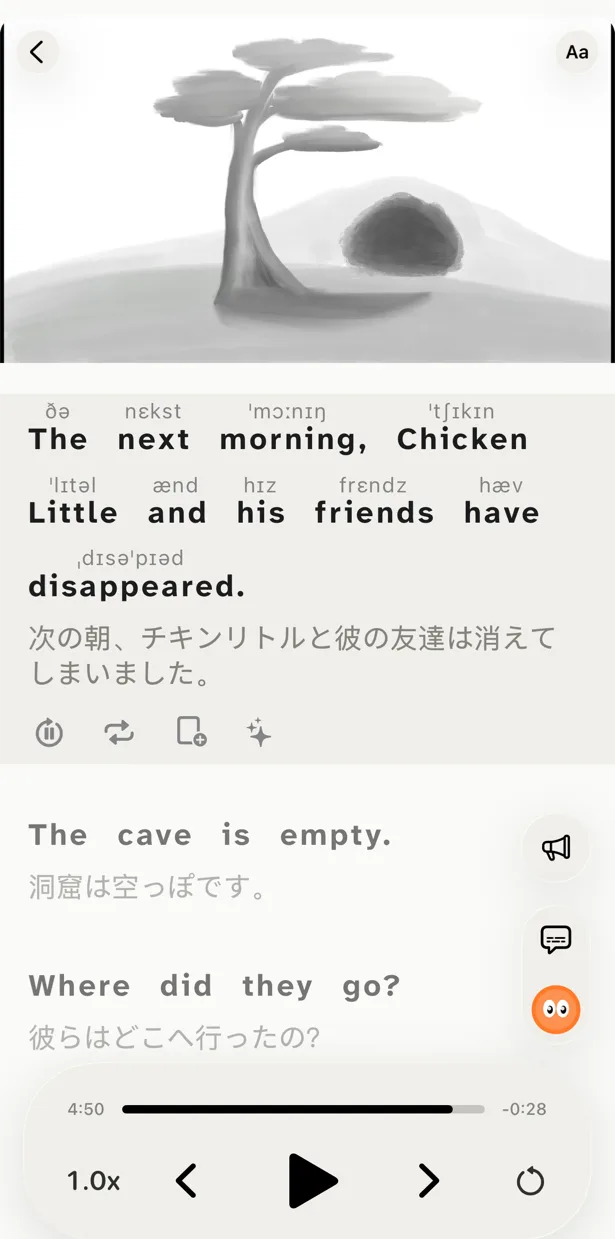
Watch stories line by line in PlayLingo
Paste a link to any of these YouTube videos into PlayLingo and the story is split into lines, each one under the video with a translation into your language. Tap a word or a phrase and Lingo explains what it means in that sentence, which helps with a turn of phrase in Danny and Annie’s conversation or a joke at The Moth. Save a phrase and it comes back for review later, together with the moment in the story where you heard it.
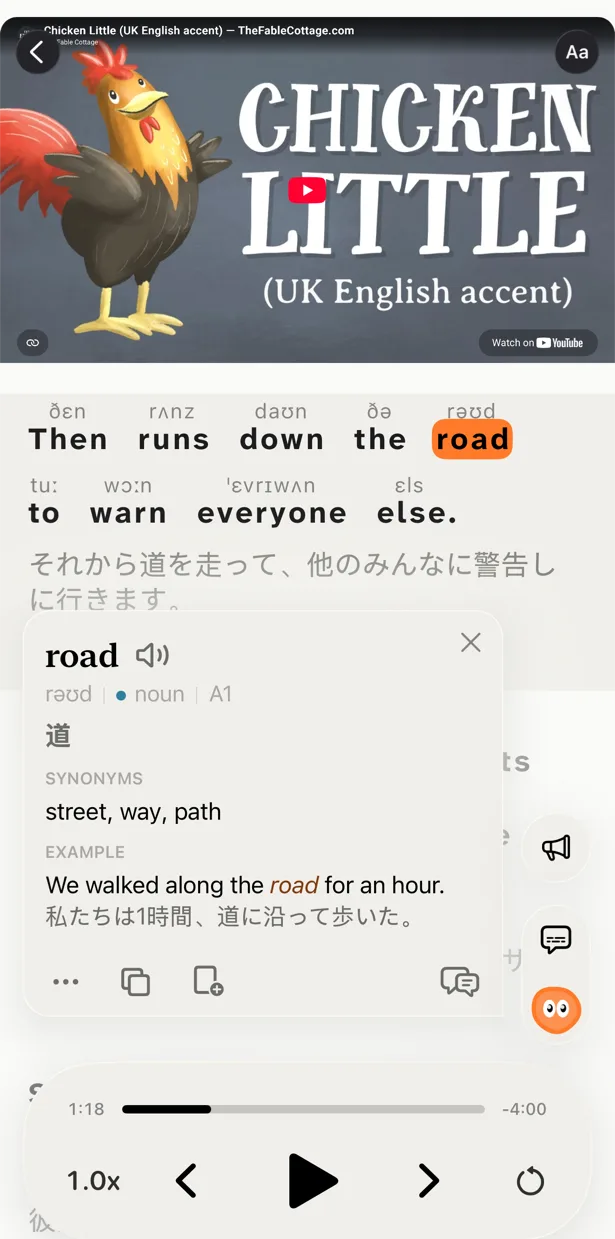
Two modes match the routine above. Listen hides the text, pauses after each line and lets you reveal a sentence word by word. Speak asks you to repeat a line out loud and lights up the words as you say them. You can also slow a video down or loop one line. PlayLingo works on iPhone, iPad, Mac and Android and is free to start, with a daily portion of practice. If you would rather not search at all, there is a catalog of videos sorted by level to learn English with YouTube.
Common questions
Can I learn English through stories as a beginner?
Yes, from about A1, as long as the story is short, the pictures support the words and the text is on screen. The first four channels on this list are made for exactly that. If even English Singsing is too fast, a beginner course will help you more for now.
Where can I find English short stories with subtitles for free?
All seven channels above are free on YouTube. LearnEnglish Kids, English Singsing, Little Fox and Vooks put the text into the video itself. storybooth, StoryCorps and The Moth add their own English subtitles, which you turn on with the CC button.
What is the best story channel for adult beginners?
Most easy stories on YouTube are made for children, and that is fine: simple language is simple language. If fairy tales bore you, start with LearnEnglish Kids for a week, then move to storybooth, where the stories are true and told by the people they happened to.
Should I watch with English subtitles or subtitles in my language?
English, almost always. Subtitles in your own language let you understand the story without listening to the English. Use a translation only for the line that stops you, then go back to English.
Read also
 Free Easy English Books by Level, A1 to C1Seven free English books from A1 to C1: a picture book with audio and six classics we ranked by how many uncommon words they use, with free audiobooks.
 English Podcasts for Learners, A1 to C1Five English podcasts for learners from A1 to C1: how fast each host talks, which ones give you the transcript for free, and how to listen.
 English Listening Practice on YouTube, by LevelSix YouTube channels for English listening practice, from A1 to C1, with what each shows on screen and a 20-minute routine for training your ear.
 8 English Audiobook Channels on YouTube, by LevelEight YouTube channels where English books and stories are read aloud, most with the text on screen, sorted from A1 to C1, plus a way to study with them.
 7 Best YouTube Channels for Shadowing EnglishSeven YouTube channels that work for shadowing English, from A1 to C1: clear speakers, steady pace and real accents, plus a simple routine to shadow them.
 10 Best Movies to Learn English, by LevelTen movies to learn English from A2 to C1, from Toy Story to The Social Network: what each one teaches and how to study a scene, not a whole film.
 5 Best TV Series to Learn EnglishFive TV series to learn English from B1 to C1 — Friends, Young Sheldon, The Big Bang Theory, Suits and Sherlock — and how to learn from short scenes.
 10 Best English Teachers on YouTubeTen English teachers on YouTube for speaking, pronunciation, grammar and British or American accents — and how to pick the right ones for you.
 Top 10 YouTube Channels for Learning English 2026Top 10 YouTube channels for learning English in 2026, with picks for beginners, listening practice, slang, pronunciation, and real fluency.