
Free Easy English Books by Level, A1 to C1

Seven free English books from A1 to C1: a picture book with audio and six classics we ranked by how many uncommon words they use, with free audiobooks.
Reading a whole book in English is a good test of where you are. The usual advice is to start with graded readers, the shortened editions publishers write for each level. They work, but they cost money, and the “free PDF” copies you find online are usually pirated. There is a legal way to read by level for free: children’s libraries that sort their books into levels, and classic novels that are in the public domain.
The hard part is knowing which classic is easy. So in October 2026 we took the free texts of sixteen well-known books and counted, for each one, how many words fall outside the 3,000 most common words of English. That number, out of every hundred words, is roughly how often you will reach for a dictionary. Below are the seven books that make a sensible ladder, each with a free e-book and, where one exists, a free audiobook.
At a glance
- A1: The Red Raincoat, a picture book with a recorded reading
- A2: The Wonderful Wizard of Oz (about 7 uncommon words in 100)
- A2-B1: Alice’s Adventures in Wonderland (about 8 in 100)
- B1: The Happy Prince by Oscar Wilde (about 9 in 100, one short story)
- B1-B2: The Adventures of Sherlock Holmes (10 in 100)
- B2: Pride and Prejudice (11 in 100)
- B2-C1: The Great Gatsby (12 in 100)
The levels are our estimate from these counts and from reading the books, not an official label.
1. The Red Raincoat: a picture book you can listen to (A1)
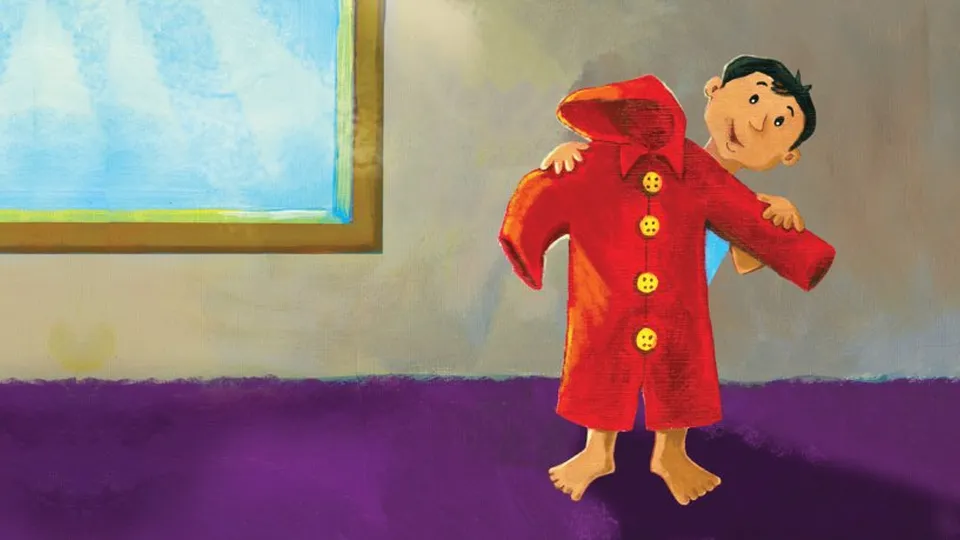
Start with: “The Red Raincoat” by Kiran Kasturia, illustrated by Zainab Tambawalla (CC BY 4.0) · StoryWeaver
StoryWeaver is a free library of children’s books from the publisher Pratham Books. Every book has a level from 1 to 4, and English alone has thousands at each of the first three. “The Red Raincoat” is the most read English book at Level 1. Manu gets a new raincoat on Sunday and asks every day if he can wear it. Each page is a picture and two or three lines, and his mother usually answers in a rhyme. The rain finally comes on Saturday.
The whole story is about 230 words. Press Readalong and you hear it read aloud, which takes about two and a half minutes. You don’t need an account to read. If a word stops you, the same book exists in 283 versions in 153 languages, so you can check the page in your own language. Picture books are for children, of course, but at A1 a finished book with a voice beats a half-read novel.
2. The Wonderful Wizard of Oz: the easiest classic we measured (A2)
Start with: chapter 1, “The Cyclone” · Standard Ebooks
Of all the books we counted, this one had the fewest uncommon words: fewer than 7 in 100. Baum wrote it for children in 1900, and the English is plain and direct. Dorothy lives on a farm in Kansas, a cyclone carries her house away, and she walks to the Emerald City to ask the Wizard to send her home. You probably know the story from the film, which helps a lot when the vocabulary gets harder.
It is also a real book: 24 short chapters and about 39,000 words, which Standard Ebooks estimates at two and a half hours of reading. Plan on several weeks at A2. Standard Ebooks gives you the e-book for free in formats for Kindle, Kobo and other readers. LibriVox, where volunteers record public-domain books, has a free reading almost four hours long.
3. Alice’s Adventures in Wonderland: short, but full of wordplay (A2-B1)
Start with: chapter 1, “Down the Rabbit-Hole” · Standard Ebooks
Alice is shorter than Oz, about 27,000 words in 12 chapters, and almost as easy by our count: about 8 uncommon words in 100. The Standard Ebooks edition keeps John Tenniel’s original drawings, which helps when Alice changes size or meets a creature you can’t picture.
The catch is the jokes. Carroll plays with words, and the book is full of funny poems, like “How doth the little crocodile”. Those parts are hard even for native speakers, so skip a poem if it stops you and keep going with the story. The LibriVox recording is about three hours.
4. The Happy Prince: one story, one evening (B1)
Start with: “The Happy Prince”, the first story in Children’s Stories · Standard Ebooks
If a novel feels like too much, start with a short story. “The Happy Prince” is about 3,500 words: a gold-covered statue stands above a city, and a small swallow who stayed behind when his friends flew to Egypt stops to rest at its feet. You can read it in one evening and finish it, which matters more for motivation than people think.
Wilde’s sentences are simple, but his words are richer than Baum’s, about 9 uncommon words in 100. On Standard Ebooks the story opens the collection Children’s Stories, followed by “The Nightingale and the Rose”, “The Selfish Giant” and others at a similar level. LibriVox has The Happy Prince and Other Tales as a recording of about an hour and forty minutes.
5. The Adventures of Sherlock Holmes: twelve stories, read one at a time (B1-B2)
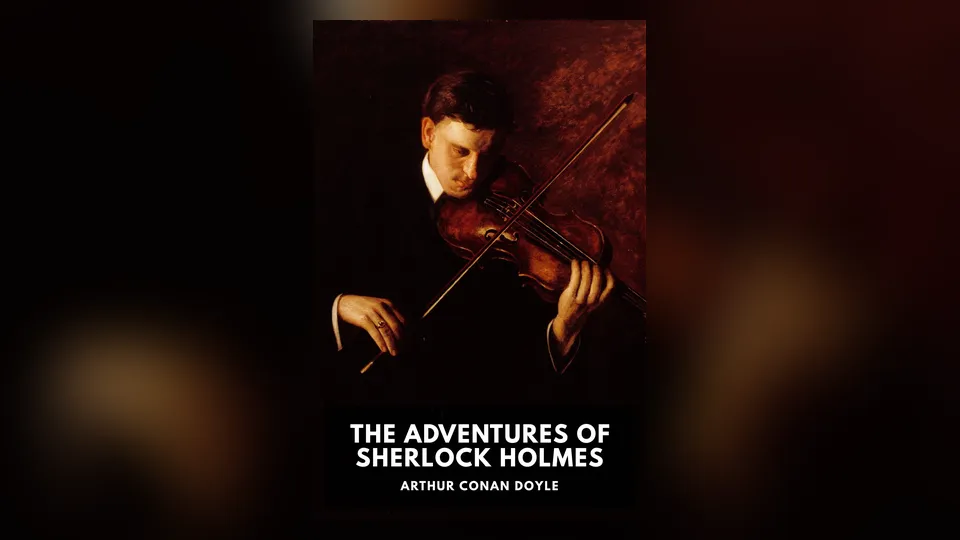
Start with: “A Scandal in Bohemia” · Standard Ebooks
The whole book is long, over 100,000 words, but it is twelve separate stories, and each one is a finished case. The first, “A Scandal in Bohemia”, the one with Irene Adler, is about 8,600 words, and Watson tells it in short, clear sentences.
Ten words in 100 fall outside the common 3,000, so you will meet old words like brougham and landau, two kinds of carriage. Most of them don’t matter for the plot: if you can follow who did what, keep reading. The LibriVox recording of all twelve stories runs to about ten hours, so you can listen to one story at a time.
6. Pride and Prejudice: long sentences, worth the effort (B2)
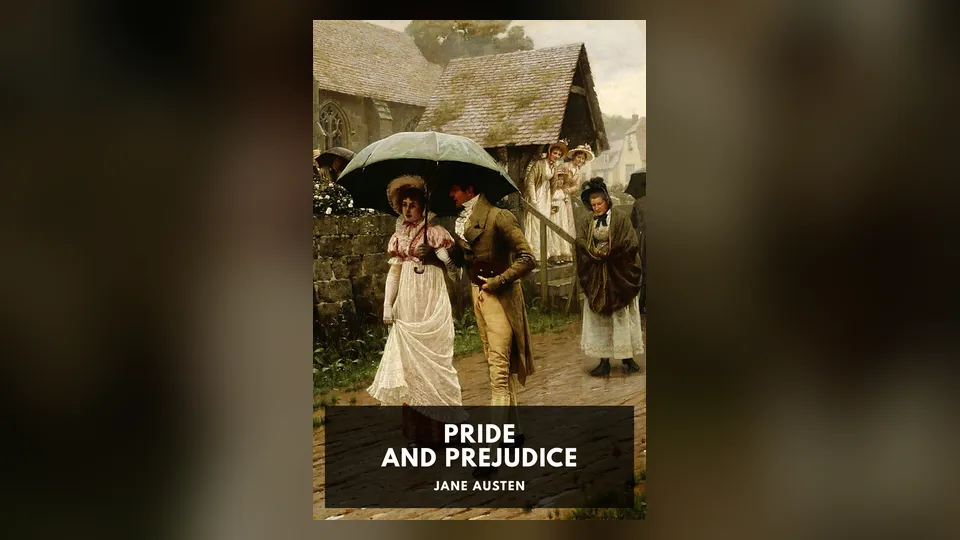
Start with: chapter 1 · Standard Ebooks
By our count Austen’s vocabulary is only a little harder than Sherlock Holmes, about 11 uncommon words in 100. The difficulty is elsewhere. Standard Ebooks shows a reading ease score for every book, and Pride and Prejudice gets 60, while the other Standard Ebooks books on this list score between 73 and 80. The sentences are long, polite and ironic, and the meaning is often in what a character doesn’t say.
It is also the longest book here: about 122,000 words in 61 chapters. The chapters are short, though, and the first one is mostly a conversation between Mr and Mrs Bennet, so it is a fair test. If you enjoy it, you are ready for most nineteenth-century fiction. LibriVox has a full recording of about thirteen hours.
7. The Great Gatsby: a short novel with rich language (B2-C1)
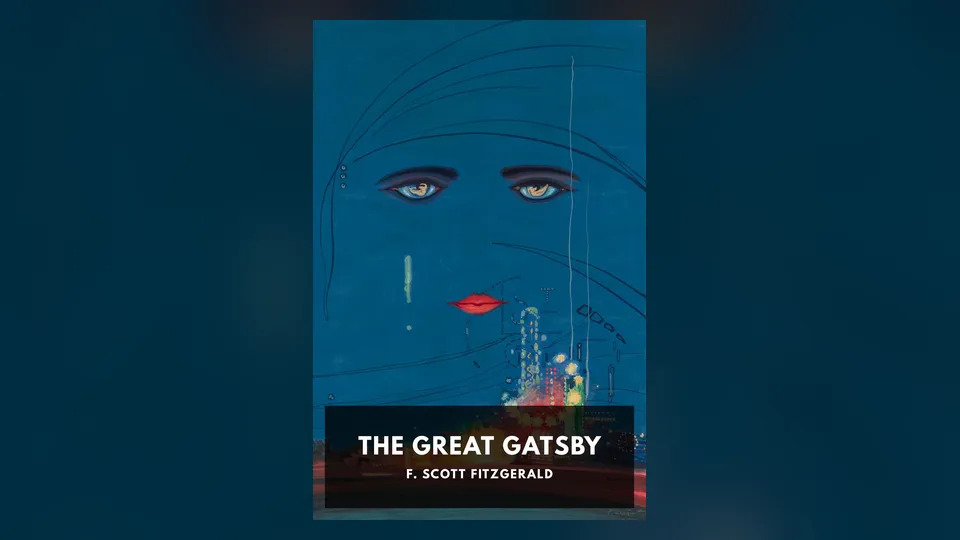
Start with: chapter 1 · Standard Ebooks
Gatsby looks like an easy choice because it is short: nine chapters, about 48,000 words. Don’t let that fool you. It had the most uncommon words of the seven, about 12 in 100. Nick Carraway tells the story of his rich neighbour on Long Island, and Fitzgerald describes people and places in words you rarely hear in conversation.
Read it when the books above feel comfortable. A good way in is to read a chapter with the audio: the LibriVox recording is about five and a half hours, one file per chapter. Standard Ebooks has the free e-book.
How to read a book in English without giving up
Short does not mean easy. The Tale of Peter Rabbit is only about 1,000 words, but by our count one word in ten is uncommon, the same as Sherlock Holmes. The Call of the Wild is a short novel and had 15 in 100, more than Gatsby. So check the first pages before you commit, not the page count.
- Test the first page. If you need the dictionary more than five or six times on one page, take an easier book from the list.
- Read for the story. Look up a word only when you can’t follow what is happening, or when it comes back for the third time.
- Listen while you read. Play the LibriVox recording and follow the text. You hear how the words sound and you can’t stop on every unknown word.
- Keep the dose small. One chapter a day is enough. A book finished in a month teaches more than three abandoned in a week.
- Write down a few words, not all of them. Five words with the sentence you found them in are worth more than fifty without.
If you prefer listening to books read aloud, our list of English audiobook channels on YouTube goes from A1 to C1 as well.
Where to find more free books
StoryWeaver has thousands of English picture books on four levels. Standard Ebooks has more than a thousand carefully edited public-domain classics, and Project Gutenberg has over 75,000 free e-books in plainer files. LibriVox has free recordings of many of them. All of these books are public domain in the United States, where these libraries are based; if you live elsewhere, it is worth checking the rules in your country, especially for books from the twentieth century.
Read with a translation under every line in PlayLingo
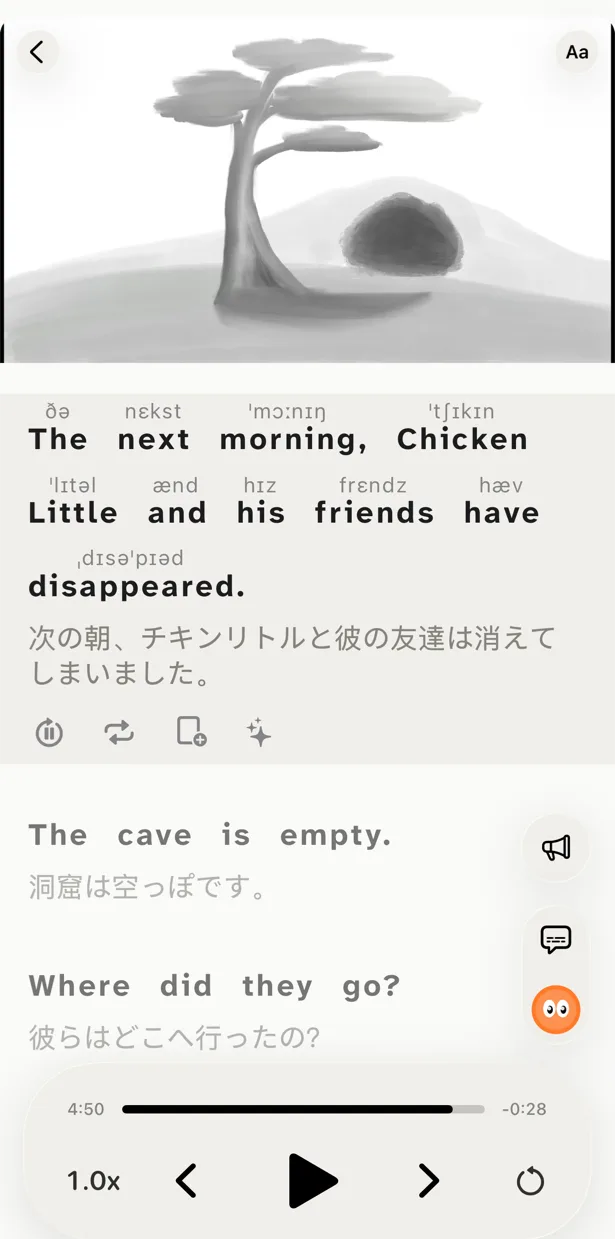
PlayLingo opens books as well as videos and podcasts. Pick a classic or a children’s book from the Books shelf, which is sorted by level, search for a public-domain title, or open your own EPUB, PDF or a photo of a page. The book is shown sentence by sentence, with the translation into your language under each line, and a voice can read it while the current word lights up.
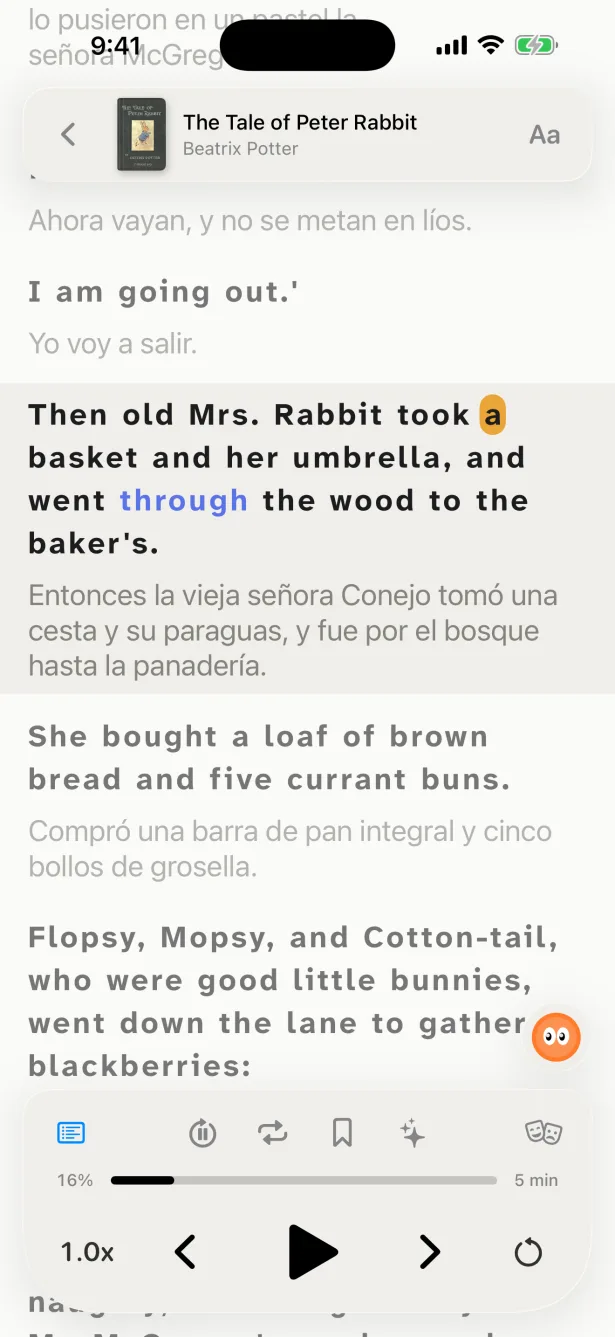
Tap a word or a phrase and Lingo explains what it means in that sentence. Save it, and it comes back for review with the sentence where you found it. Reading and the book catalog are free every day within daily limits, and Pro removes the limits. More on how it works: read books with translation.
Common questions
What are the best easy English books for beginners?
At A1, start with Level 1 picture books on StoryWeaver, such as “The Red Raincoat”, which you can also listen to. At A2, The Wonderful Wizard of Oz is the easiest classic novel we measured.
Where can I find free graded readers?
Graded readers from publishers, such as Oxford Bookworms or Penguin Readers, are paid books. For free reading by level, use a children’s library with levels, like StoryWeaver, and public-domain classics chosen for their vocabulary, like the ones in this list.
What English books should I read at B1 level?
Try “The Happy Prince” and the other stories in Oscar Wilde’s Children’s Stories, then The Adventures of Sherlock Holmes one story at a time.
Can I learn English by reading books?
Yes, if you understand most of what you read. A book gives you thousands of new sentences, each word in context. Choose a book where you know almost every word on a page, and listen to the audio while you read.
Read also
 English Podcasts for Learners, A1 to C1Five English podcasts for learners from A1 to C1: how fast each host talks, which ones give you the transcript for free, and how to listen.
 English Listening Practice on YouTube, by LevelSix YouTube channels for English listening practice, from A1 to C1, with what each shows on screen and a 20-minute routine for training your ear.
 8 English Audiobook Channels on YouTube, by LevelEight YouTube channels where English books and stories are read aloud, most with the text on screen, sorted from A1 to C1, plus a way to study with them.
 7 Best YouTube Channels for Shadowing EnglishSeven YouTube channels that work for shadowing English, from A1 to C1: clear speakers, steady pace and real accents, plus a simple routine to shadow them.
 10 Best Movies to Learn English, by LevelTen movies to learn English from A2 to C1, from Toy Story to The Social Network: what each one teaches and how to study a scene, not a whole film.
 5 Best TV Series to Learn EnglishFive TV series to learn English from B1 to C1 — Friends, Young Sheldon, The Big Bang Theory, Suits and Sherlock — and how to learn from short scenes.
 10 Best English Teachers on YouTubeTen English teachers on YouTube for speaking, pronunciation, grammar and British or American accents — and how to pick the right ones for you.
 Top 10 YouTube Channels for Learning English 2026Top 10 YouTube channels for learning English in 2026, with picks for beginners, listening practice, slang, pronunciation, and real fluency.