
English Podcasts for Learners, A1 to C1

Five English podcasts for learners from A1 to C1: how fast each host talks, which ones give you the transcript for free, and how to listen.
A podcast is the easiest way to hear a lot of English. You can listen on the bus, while cooking, on a walk. The problem is choosing one. Search for “English podcast for beginners” and you get hundreds of hour-long videos with a level in the title, and many of them use synthetic voices and stock photos instead of a real host.
So in October 2026 we went through the learner podcasts that also publish on YouTube and kept five with real people at the microphone. For each one we checked who talks, where you can get the text of an episode, and how fast the host speaks. That last number we counted ourselves from the subtitles of one episode, in words per minute, because it tells you more about difficulty than any label.
At a glance
- A1-A2: Easy Stories in English (about 60 words a minute, free transcripts)
- B1: The English Podcast by English with Evie (about 135, no transcript)
- B1-B2: 6 Minute English from BBC Learning English (about 165, free transcripts)
- B2: Thinking in English (about 135, free transcripts)
- B2-C1: All Ears English (about 200, paid transcripts)
1. Easy Stories in English: a story you can follow from day one (A1-A2)
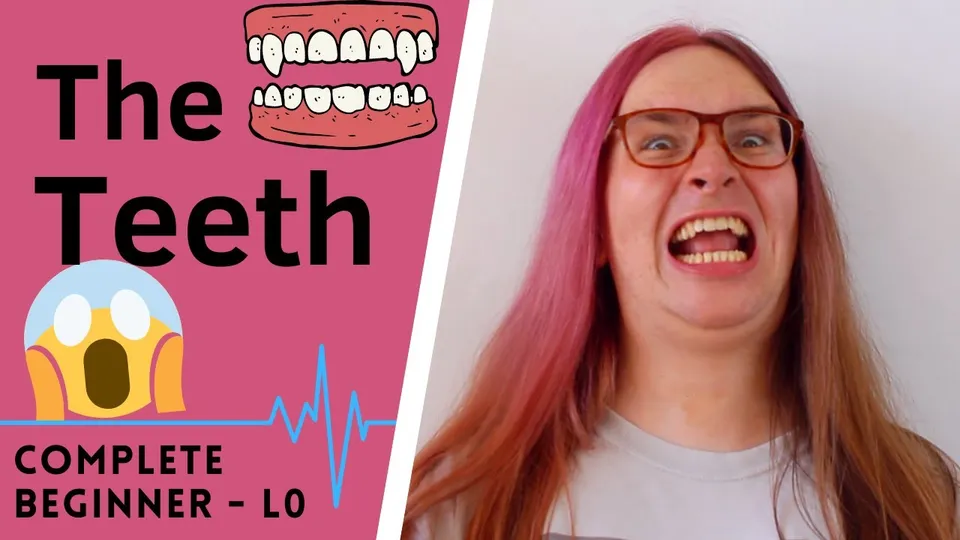
Start with: “The Teeth - Complete Beginner Story in English” · Easy Stories in English on YouTube
Ariel Goodbody is a language teacher who writes stories for each level and reads them aloud. “The Teeth” is marked Complete Beginner, and it really is: about 60 words a minute, short sentences said two or three times, and a whiteboard where Ariel draws what is happening. A man asks the time, smiles, and his teeth are five centimetres long. You don’t need much English to get the joke.
The podcast’s website sorts episodes into four levels, from Beginner to Advanced, with more than 80 episodes at each of the two easiest. Every episode has a free transcript on the site, and some can also be downloaded as a PDF. One thing to know: in May 2026 Ariel said they could no longer make an episode every two weeks, so new ones come less often. The archive is big enough for months.
2. The English Podcast by English with Evie: one person, everyday British English (B1)
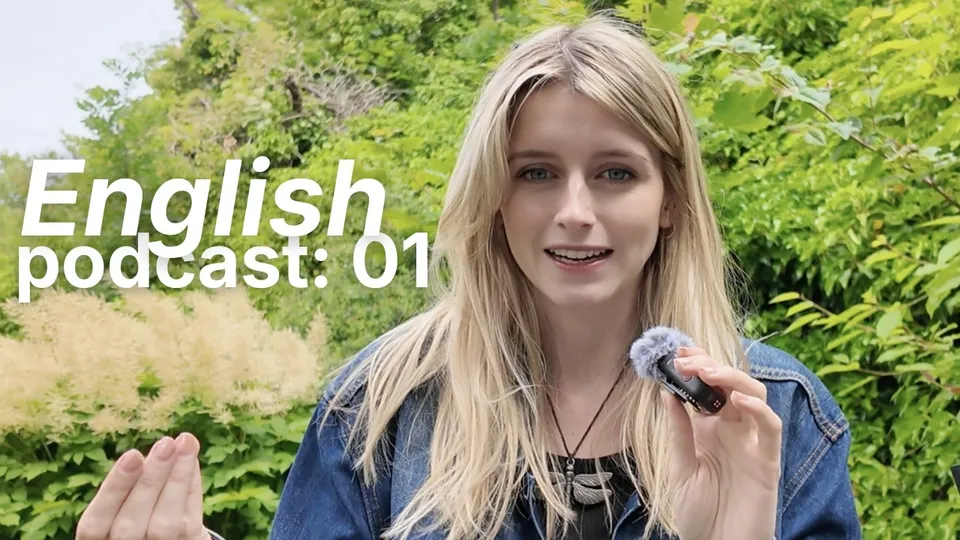
Start with: “How to study English as a busy person | The English Podcast” · English with Evie on YouTube
Evie sits in a garden with a small microphone in her hand and talks to you, alone, for about fifteen minutes. The first episode is about learning English when you are busy, and it has been watched more than 800,000 times since June 2026. She speaks British English at around 135 words a minute, slower than a conversation between friends, and she says she starts the first episode “nice and easy”.
That makes it a good first step from learner stories to real talk. There is no transcript and no text on screen, only YouTube’s automatic subtitles, so it suits people who can already follow simple English without reading. The podcast is also on Spotify. If you like her voice, the channel has a series called Slow British English, filmed around her everyday life.
3. 6 Minute English: the BBC classic, now on video (B1-B2)
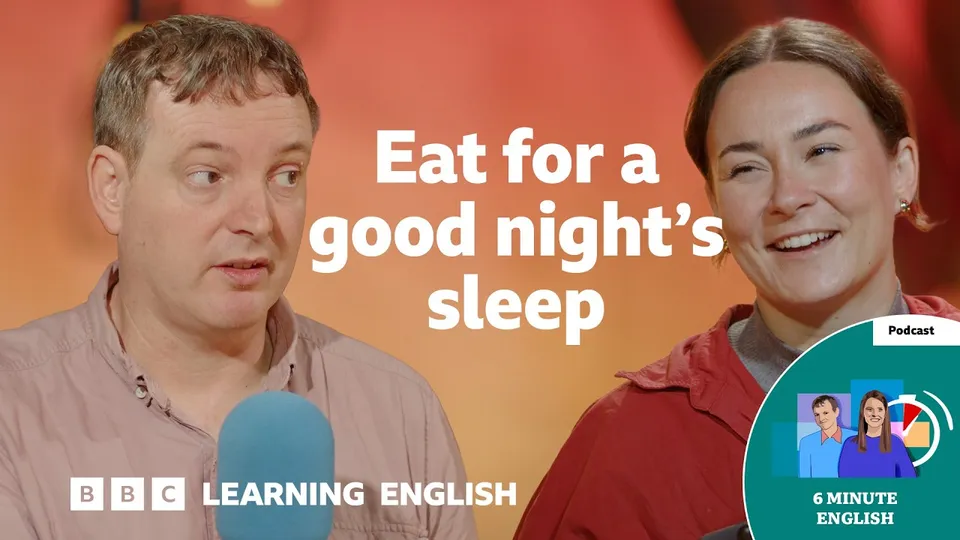
Start with: “What should you eat for a better night’s sleep?” · BBC Learning English on YouTube
Two presenters take one question, play short extracts from BBC radio programmes and explain six words along the way. In the sleep episode Georgie and Phil talk about how food affects sleep, with a short interview clip in the middle. The BBC labels the show intermediate, and at about 165 words a minute it is faster than the two podcasts above. A new episode comes out every week, and the newest ones come with video of the presenters.
This is the one to pick if you want the text. On the BBC Learning English website every episode has a transcript, a worksheet and a quiz, all free, and the YouTube videos have subtitles made by the BBC, not automatic ones. The BBC notes that the transcript is not always word for word. If six minutes at this speed is too much, the same site suggests a gentler series, Real Easy English.
4. Thinking in English: history and news, explained slowly (B2)
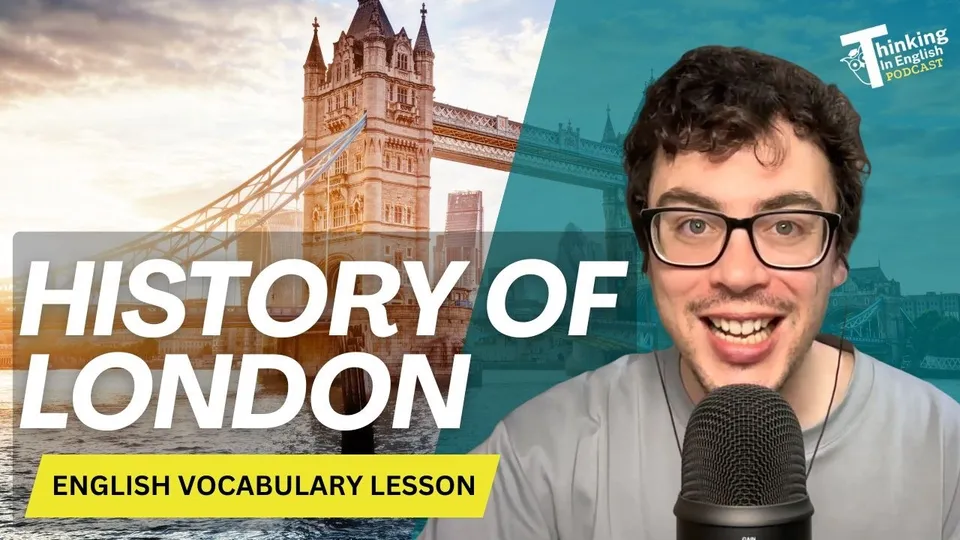
Start with: “History of London (English Vocabulary Lesson)” · Thinking in English Podcast on YouTube
Tom Wilkinson describes his show as a podcast for intermediate and advanced learners, and the topics are grown-up: the history of London, why places get renamed, why Spain is banning evictions. He speaks at about 135 words a minute, the same pace as Evie, but the vocabulary is much richer. When a harder word comes up, he stops and explains it: “Invasion. An attack by an armed force…”
The video version helps a lot. On the left half of the screen his words appear in large letters, with the current word highlighted as he says it, so you can read along like karaoke. The full transcript of each episode is free on the Thinking in English blog, linked in the description. The show has passed 400 episodes, and the history ones are the most watched.
5. All Ears English: fast American conversation (B2-C1)
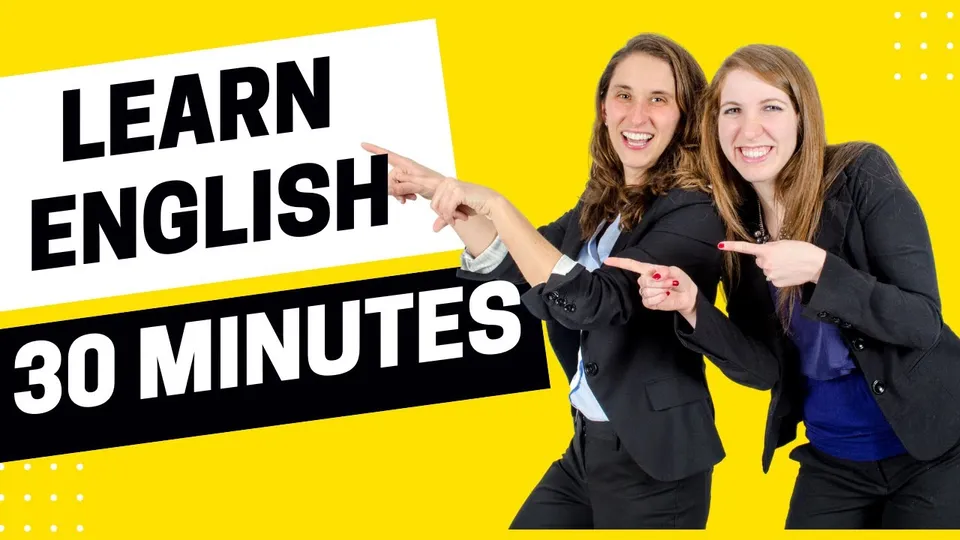
Start with: “Learn English in 30 Minutes! - All Ears English Podcast 1699” · All Ears English on YouTube
Two American hosts talk over a video call, the way friends would. In the episode we picked they speak at about 200 words a minute, which is much faster than anything above. Most episodes run 15-20 minutes, and each is built around one phrase or situation: when to use “that”, a more interesting way to say “I think”, how to talk about sleep. The numbering has passed 2,700.
The transcripts are a paid subscription, sent by email every Monday. You don’t have to pay to read along, though: the YouTube episodes we checked have English subtitles written by the show, not automatic ones. Don’t start here unless B1 podcasts feel comfortable. At this speed, a level too early means you just hear noise.
How to learn from a podcast, step by step
Most people put a podcast on in the background and stop paying attention after two minutes. Here is a routine that takes about twenty minutes and works with every show above:
- Pick an episode at your level. On the first listen you should get the main idea. If you don’t, go one podcast up the list.
- Listen once without text. Don’t stop. Write down two or three things you understood.
- Listen again with the transcript. Read along with the subtitles or the text from the website. Mark the places where you heard something different.
- Replay the hard sentences. Play each one three or four times, slower if you need to. Usually the problem is a word you know, said quickly or joined to the next one.
- Listen once more without text, on the move. On a walk or on the bus later that day. It will sound much clearer.
One episode a day like this beats an hour of background listening. When you understand almost everything on the first try, move to the next podcast on the list. If you prefer video, our English listening practice channels by level work the same way.
Listen with the text in PlayLingo
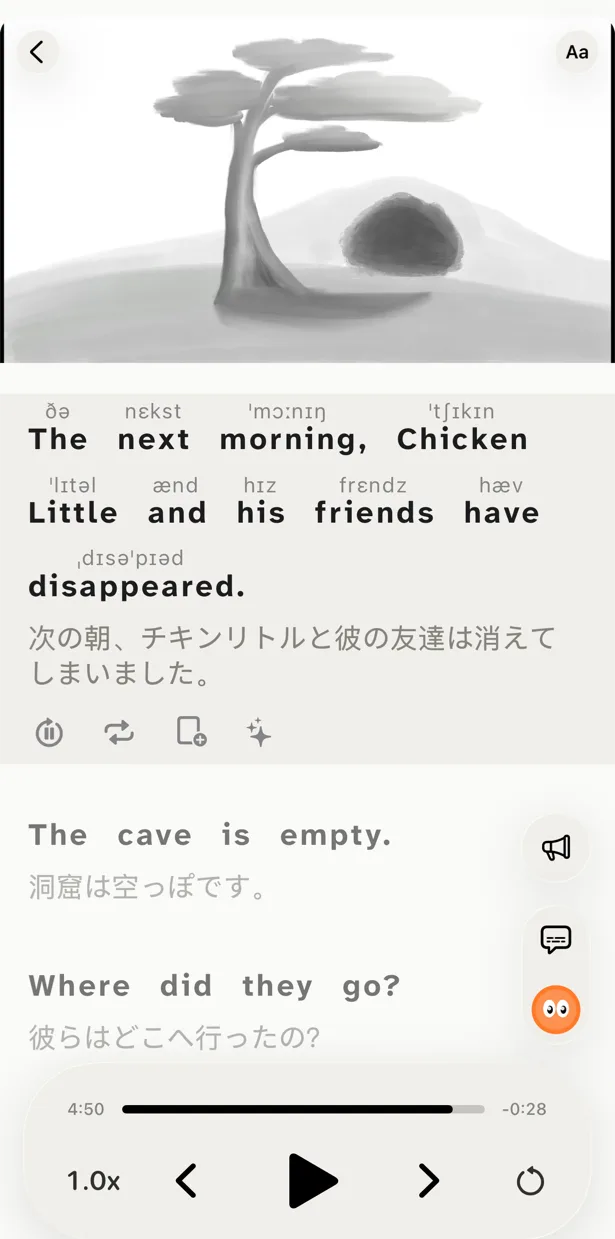
PlayLingo opens podcasts as well as videos. Search for a show by name, or pick one from the podcast shelf, and play an episode. PlayLingo makes the transcript from the audio, splits it into sentences that follow the speech, and shows the translation into your language under each line. Tap a word or a phrase and Lingo explains what it means in that sentence. Save it, and it comes back for review with the line where you heard it.
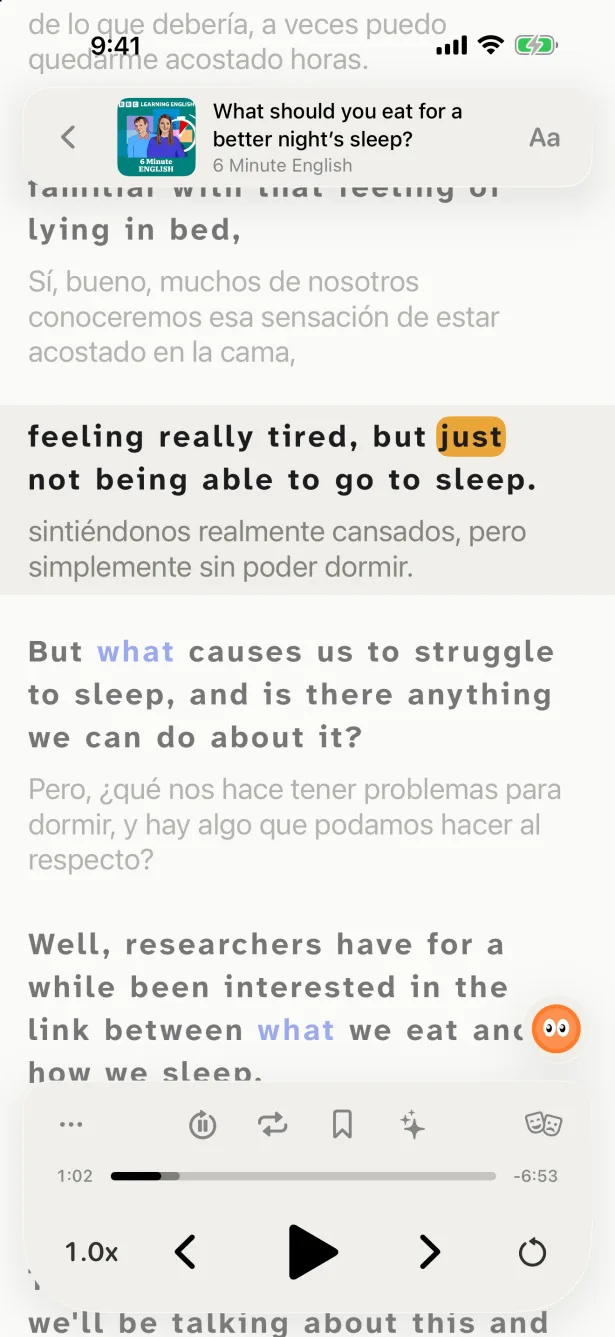
This helps most with shows that don’t give you the text for free, like The English Podcast or All Ears English. You can replay a line, slow the speech down, or hide the text to check your ear. Listening to episodes is free; making transcripts is part of Pro, with three hours of episodes a week. Every podcast in this list is also on YouTube, and any YouTube video works in PlayLingo with subtitles split into lines. More on how it works: podcasts with transcripts.
Common questions
What is the best English podcast for beginners?
Start with the Beginner stories from Easy Stories in English. They are slow, repeat a lot, and each one has a free transcript. When they feel easy, move on to 6 Minute English from the BBC.
Which English learning podcasts have transcripts?
Easy Stories in English, 6 Minute English and Thinking in English publish the text of every episode for free on their websites. All Ears English sells transcripts, but its YouTube videos have English subtitles from the show. The English Podcast by English with Evie has only automatic subtitles on YouTube.
What English podcast is good for B1 level?
The English Podcast by English with Evie is a good start: one person, clear British English, about fifteen minutes. Then try 6 Minute English, which is a little faster and teaches six words in every episode.
Can I learn English just by listening to podcasts?
Listening alone takes a long time if you never check what you heard. Use the transcript: listen first, then read along, then listen again. That turns a podcast from background noise into practice.
Read also
 English Listening Practice on YouTube, by LevelSix YouTube channels for English listening practice, from A1 to C1, with what each shows on screen and a 20-minute routine for training your ear.
 8 English Audiobook Channels on YouTube, by LevelEight YouTube channels where English books and stories are read aloud, most with the text on screen, sorted from A1 to C1, plus a way to study with them.
 7 Best YouTube Channels for Shadowing EnglishSeven YouTube channels that work for shadowing English, from A1 to C1: clear speakers, steady pace and real accents, plus a simple routine to shadow them.
 10 Best Movies to Learn English, by LevelTen movies to learn English from A2 to C1, from Toy Story to The Social Network: what each one teaches and how to study a scene, not a whole film.
 5 Best TV Series to Learn EnglishFive TV series to learn English from B1 to C1 — Friends, Young Sheldon, The Big Bang Theory, Suits and Sherlock — and how to learn from short scenes.
 10 Best English Teachers on YouTubeTen English teachers on YouTube for speaking, pronunciation, grammar and British or American accents — and how to pick the right ones for you.
 Top 10 YouTube Channels for Learning English 2026Top 10 YouTube channels for learning English in 2026, with picks for beginners, listening practice, slang, pronunciation, and real fluency.