
Podcasts to Learn Spanish by Level, A1 to C1

Six podcasts to learn Spanish from A1 to C1: who hosts each one, how fast they talk, which give you the transcript for free, and how to listen.
Spanish podcasts are easy to find and hard to choose between. Some teach in English and drop in a Spanish word now and then. Others are a full half hour of fast Spanish from Mexico or Spain. The level label on the cover rarely tells you which one you are about to get.
In November 2026 we went through the learner podcasts that also publish on YouTube and kept six, from a first lesson for complete beginners to a show made for native speakers. For each one we checked who hosts it, what the YouTube video shows on screen, and where you can read the text of an episode. For the shows that are all in Spanish we also counted how fast the hosts talk, in words per minute, from the subtitles of one episode.
At a glance
- A1-A2: Coffee Break Spanish (lessons in English, no free transcript)
- A2-B1: Duolingo Spanish Podcast (stories with English narration, free transcripts)
- B1: Easy Spanish Podcast (about 140 words a minute, transcripts for members)
- B1-B2: Intermediate Spanish Podcast by Spanish Language Coach (about 125, free transcripts)
- B2: How to Spanish Podcast (about 165, transcripts for members)
- C1: Radio Ambulante (about 145, free transcripts)
1. Coffee Break Spanish: a teacher and a learner, from zero (A1-A2)
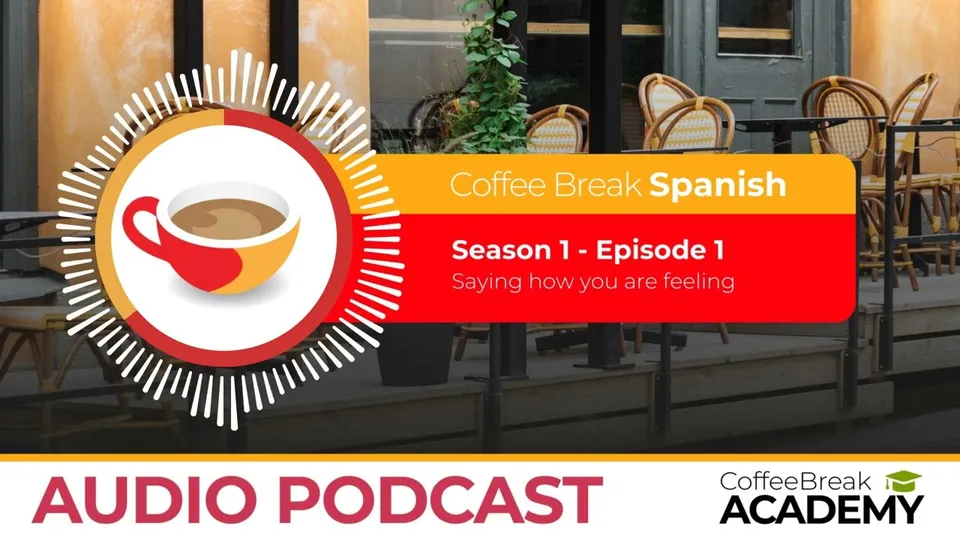
Start with: “Asking and answering “How are you?” in Spanish | Coffee Break Spanish Podcast S1E01” · Coffee Break Spanish on YouTube
This is a lesson, not a conversation. Mark, the teacher, explains in English, and Kara plays the learner and repeats each new word after him. In the first episode you get hola, ¿qué tal?, bien, gracias, muy bien and fatal, each said several times, and Mark asks you to say them out loud along with Kara. It runs eleven minutes. Most of what you hear is English, which is exactly what a complete beginner needs.
The free version on YouTube is audio with a still picture, so there is nothing to read. Coffee Break’s site splits the course into five levels, and every level starts with a free podcast; Level 1 is marked A1-A2. The lesson notes, on-screen text and exercises come with the paid course. When the phrases from Level 1 feel automatic, move on: the next shows on this list are mostly in Spanish.
2. Duolingo Spanish Podcast: true stories, half in English (A2-B1)
Start with: “Sin miedo I Duolingo Spanish Podcast I Episode #2” · Duolingo on YouTube
Most episodes are a true story told by the person it happened to (the last season, Duo’s Film Club, is about films instead). The storytellers speak Spanish, and the host, Martina Castro, fills in the gaps in English, so you never lose the thread. In “Sin miedo”, Belén moves from Chile to Buenos Aires at 28 to start a new life with her boyfriend, and it does not go as planned. Duolingo says the Spanish is for intermediate learners, but with the English narration a strong A2 learner can follow it.
The YouTube version shows every line on screen as it is spoken, the Spanish and the English, on a plain white background. On podcast.duolingo.com each episode page has the full transcript. One thing to know: Duolingo has stopped making podcasts. The last Spanish episode came out in February 2024, but all of them, more than 150 in Spanish, are still online and free.
3. Easy Spanish Podcast: everyday conversation with subtitles in two languages (B1)
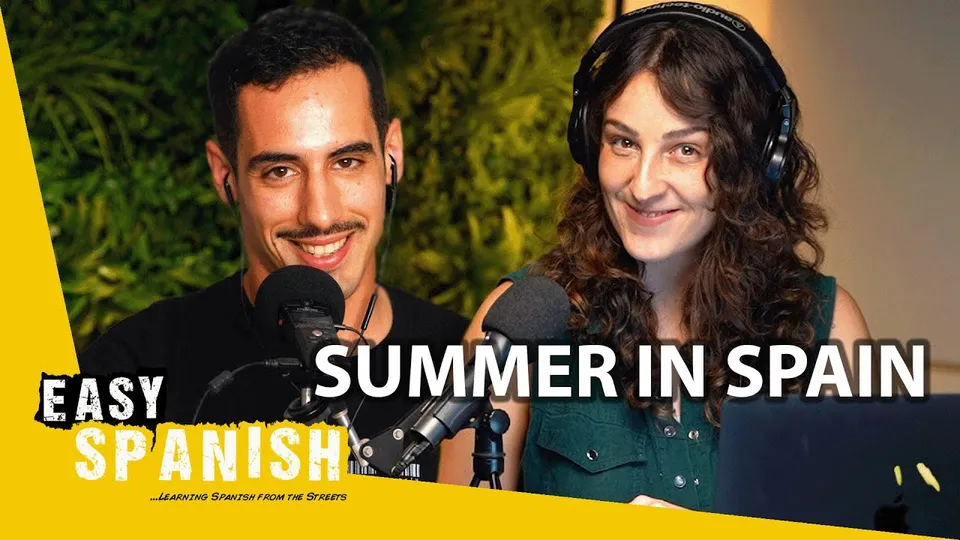
Start with: “3 Destinations for a Summer Trip to Spain | Easy Spanish Podcast 204” · Easy Spanish on YouTube
Two people from the Easy Spanish team sit at microphones and talk for about twenty minutes. In episode 204, Pau asks David, who is from Spain, where to go in summer, a question that came from their Discord. They speak at about 140 words a minute, a relaxed pace for a real conversation, and they sound like two colleagues chatting, not like a lesson.
What makes the video version useful is the subtitles burned into the picture: each Spanish line with the English translation right under it. No other show here lets you read along with a translation this easily. The full interactive transcript is for members of their Patreon. New episodes still come out every week; number 269 was published on 28 October 2026.
4. Intermediate Spanish Podcast: one teacher, Spain, free transcript (B1-B2)
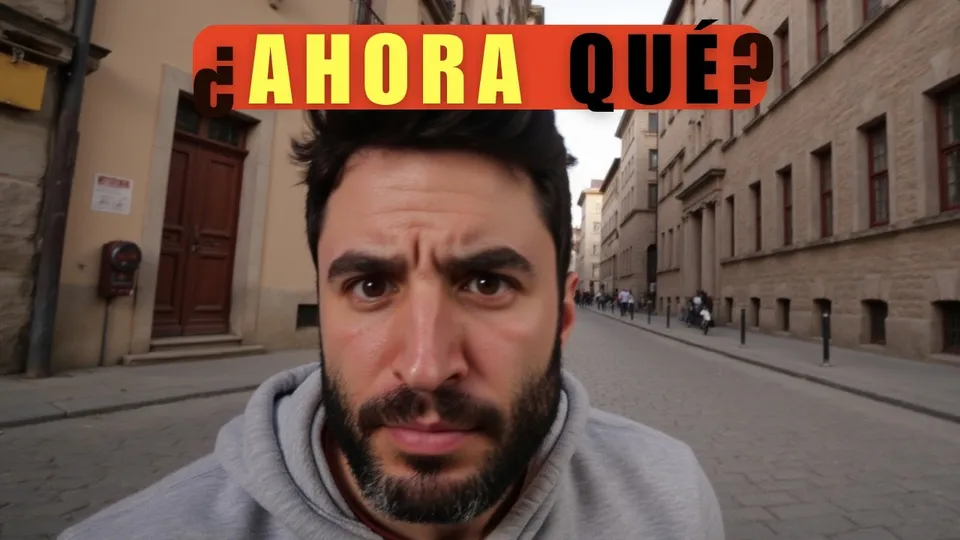
Start with: “¿Qué pasará en España si los TOURISTS GO HOME?” · Spanish Language Coach on YouTube
Cesar is a Spanish teacher based in Valencia, and he records alone, talking straight to you. The episode on tourism opens in Barcelona, in front of a wall that says “Tourist go home”, and goes on to what would happen if Spain stopped being a tourist country. He speaks at about 125 words a minute, slower than the Easy Spanish conversation, but the topics and the vocabulary are more grown-up. When a word may be new, he explains it on the spot: “Mear es hacer pis.”
The transcript, an English translation and vocabulary flashcards for each episode are free on spanishlanguagecoach.com; you get them by leaving your email. On YouTube, the episode we checked has Spanish subtitles written by the show, plus English, German and French. If this level gets easy, the same teacher has a second show, Advanced Spanish Podcast.
5. How to Spanish Podcast: two hosts, Mexican Spanish at full speed (B2)
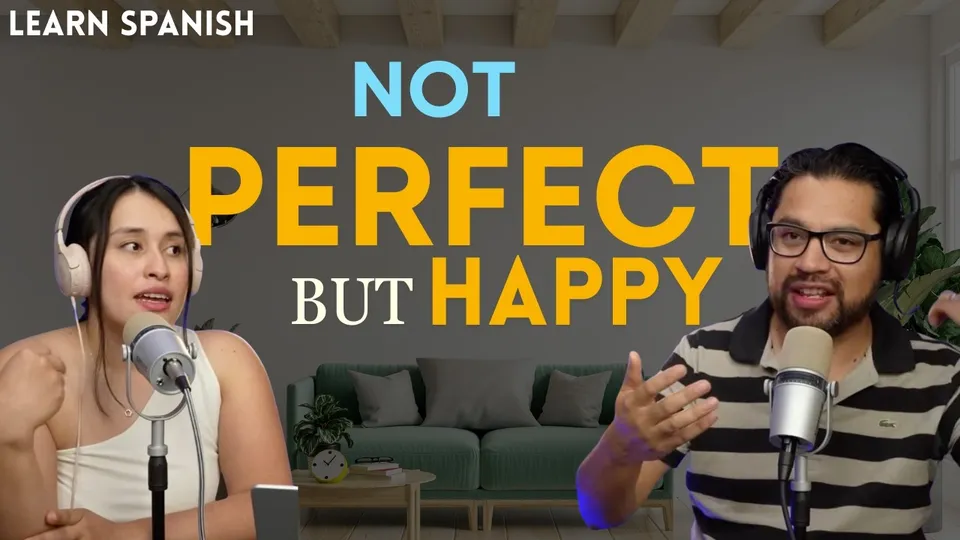
Start with: “Why You Freeze Speaking Spanish (And The “70% Rule” to Fix It)” · How to Spanish Podcast on YouTube
David and Ana speak the Spanish of Mexico, with the words and the rhythm you will not get from a textbook. At about 165 words a minute, they are the fastest learner show on this list. The episode we picked is about freezing up when you try to speak, and the “70% rule” they suggest for getting past it. It is a good topic for a first episode because you already know what they mean.
There is no text on screen, only YouTube’s automatic subtitles. The transcript and a vocabulary guide for each episode are part of their paid community. The show has passed 420 episodes, and many titles are about Mexico itself, so it suits you best if that is the Spanish you want to understand. Don’t start here until the Easy Spanish conversations feel comfortable.
6. Radio Ambulante: stories from Latin America, made for native speakers (C1)
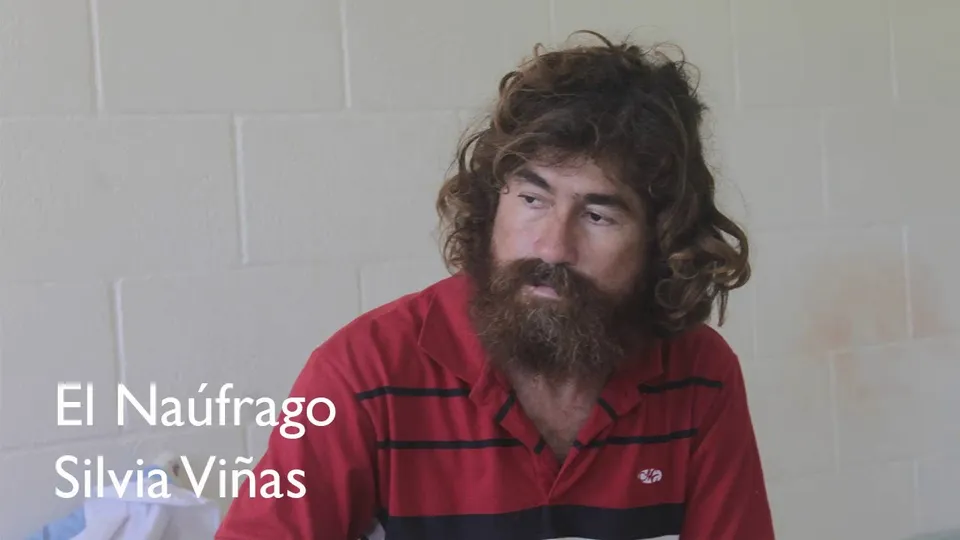
Start with: “El náufrago” · Radio Ambulante on YouTube
Radio Ambulante is a narrative journalism podcast, and nothing in it is slowed down for learners. Each episode is one story from Latin America, told by reporters and the people who lived it. “El náufrago” is the story of Salvador Alvarenga, the man from El Salvador who spent 438 days adrift at sea, told by the show’s host, Daniel Alarcón. It runs half an hour at about 145 words a minute.
The text is easy to get here too. The episode pages on radioambulante.org link to a free transcript in Spanish and an English translation. On YouTube you will find older episodes, with the Spanish text on a black screen; new ones come out in podcast apps. The team also makes an app for intermediate learners, Lupa, built on the same stories.
How to learn from a Spanish podcast, step by step
Background listening feels productive, but most of it goes past you. This routine takes about twenty minutes and works with any show above:
- Pick an episode at your level. On the first listen you should get the main idea. If you don’t, go one show up the list.
- Listen once without the text. Don’t stop. Write down two or three things you understood.
- Listen again with the transcript. Use the subtitles or the text from the show’s website. Mark the places where you heard something different.
- Replay the hard sentences. Three or four times, slower if you need to. In Spanish the trouble is often two words run together, like “va a ir” said as one.
- Listen once more later that day. On a walk or on the bus, without the text. It will sound much clearer.
One episode like this a day beats an hour in the background. If you would rather start with short stories on video, see our Spanish stories for beginners on YouTube, and for a wider plan, how to learn Spanish with YouTube.
Listen with the text in PlayLingo
PlayLingo opens podcasts as well as videos. Search for a show by name, or pick one from the podcast shelf, and play an episode. PlayLingo makes the transcript from the audio, splits it into sentences that follow the speech, and shows the translation into your language under each line. Tap a word or a phrase and Lingo explains what it means in that sentence. Save it, and it comes back for review with the line where you heard it.
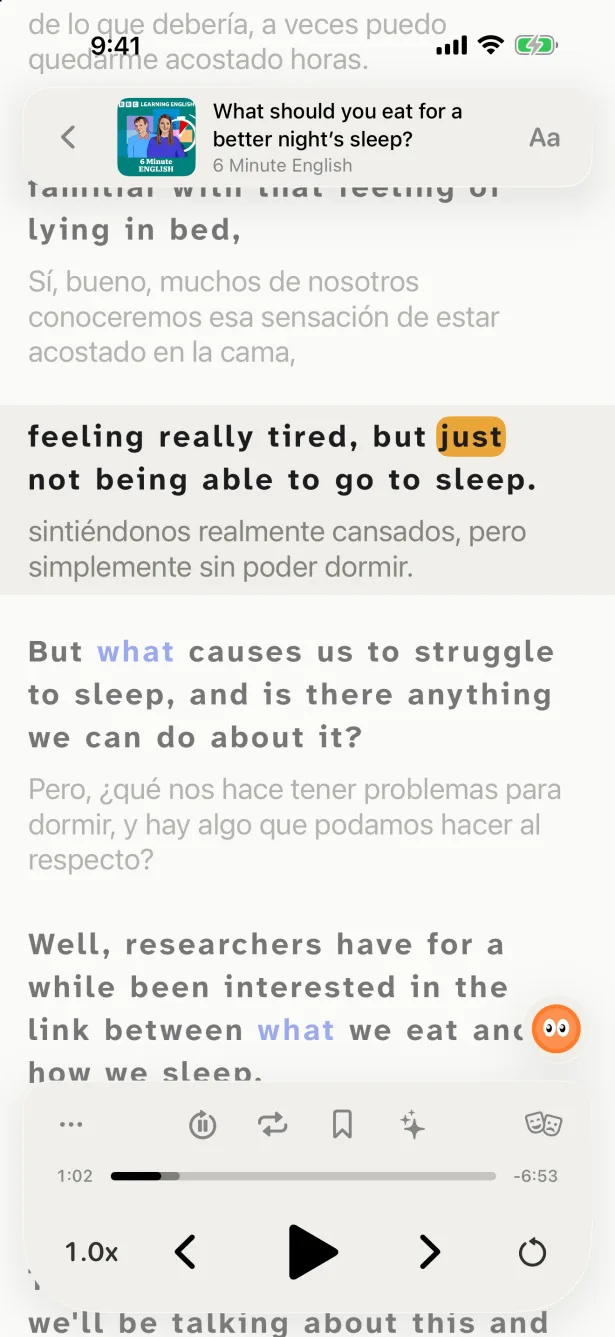
This helps most with the shows that keep their transcripts for members, like Easy Spanish and How to Spanish. You can replay a line, slow the speech down, or hide the text to test your ear. Listening to episodes is free; making transcripts is part of Pro, with a weekly limit. All six shows are also on YouTube, and any YouTube video works in PlayLingo with subtitles split into lines. More on how it works: podcasts with transcripts.
Common questions
What is the best podcast to learn Spanish as a beginner?
If you are starting from zero, Coffee Break Spanish: the teacher explains in English and you repeat the words along with the learner. Once you know the basics, the Duolingo Spanish Podcast is the gentlest way into real Spanish, because the host retells the hard parts in English.
Which Spanish podcasts have free transcripts?
The Duolingo Spanish Podcast and Radio Ambulante publish free transcripts on their websites. Spanish Language Coach sends the transcript, a translation and flashcards for free when you sign up with your email. Easy Spanish and How to Spanish keep transcripts for paying members.
What Spanish podcast is good for B1 or B2?
At B1, try the Easy Spanish Podcast: a relaxed conversation with Spanish and English subtitles in the video. For B2, Cesar’s Intermediate Spanish Podcast and then How to Spanish, which is faster and very Mexican.
Can I learn Spanish just by listening to podcasts?
Listening alone takes a long time if you never check what you heard. Use the transcript: listen first, then read along, then listen again. That turns a podcast from background noise into practice.