
Spanish Stories for Beginners on YouTube

Seven YouTube channels with easy Spanish stories, from A1 to B1-B2, with what each shows on screen: Spanish text, English translation or nothing.
A short story is the friendliest thing you can listen to in a new language. It has a beginning and an end, the same few characters keep coming back, and the words repeat because the plot needs them to. By the end of a five-minute story the key words have come round several times, and you rarely need to look the same one up twice.
YouTube has a lot of Spanish stories for beginners, and they are not all made the same way. Some put the Spanish and the English on screen line by line. Some show nothing and let a teacher act the story out. Some retell fairy tales you already know. We went through the channels in October 2026, opened the videos and wrote down what each one shows on screen, who tells the story and what level it really is. Seven made the list.
At a glance
- A1: Dreaming Spanish
- A1-A2: ListenES, The Comprehension Lab, Polyglot Pages
- A2: The Fable Cottage
- B1: Use your Spanish
- B1-B2: Español con Juan
1. Dreaming Spanish: stories acted out, no text at all (A1)
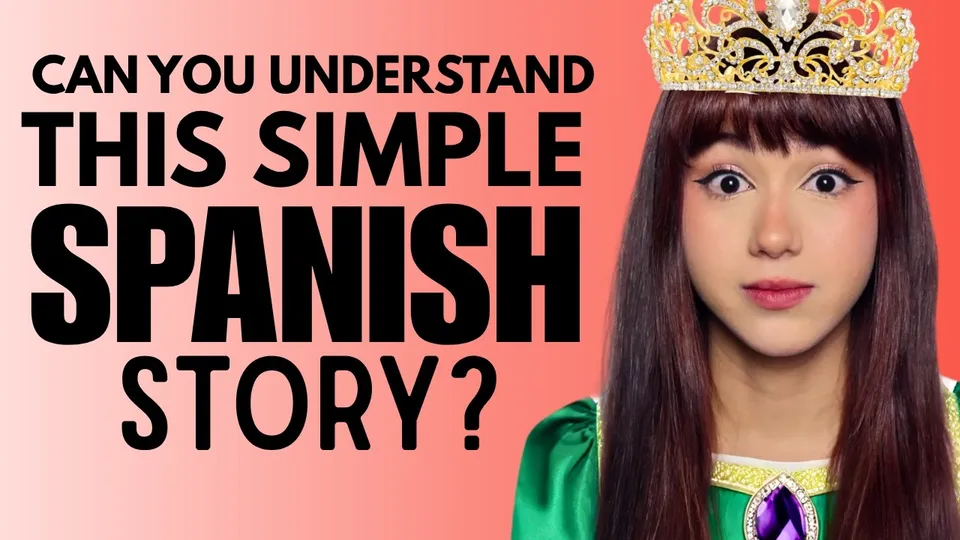
Start with: “Easiest Spanish Story You’ll Ever See” · Dreaming Spanish on YouTube
Dreaming Spanish has 638,000 subscribers and a method with one rule: no grammar, just Spanish you can understand. Its Superbeginner stories are built for people who know almost nothing. There is no text on the screen. Instead the teachers carry the meaning with costumes, props and pictures that appear around them. In “Easiest Spanish Story You’ll Ever See”, Shelcin tells the story of a man who travels to the edge of the world for the love of one woman, and you follow it from the pictures as much as from the words.
That is the point of the method: you understand first and read later. If you want more than ten minutes, the channel has a one-hour compilation, “Spanish Stories for Complete Beginners”, with eleven short stories in a row, from “The Coffee Shop” to “Movie Night”. YouTube offers only automatic Spanish captions here, so treat these videos as listening, not reading.
2. ListenES: one story, three passes (A1-A2)
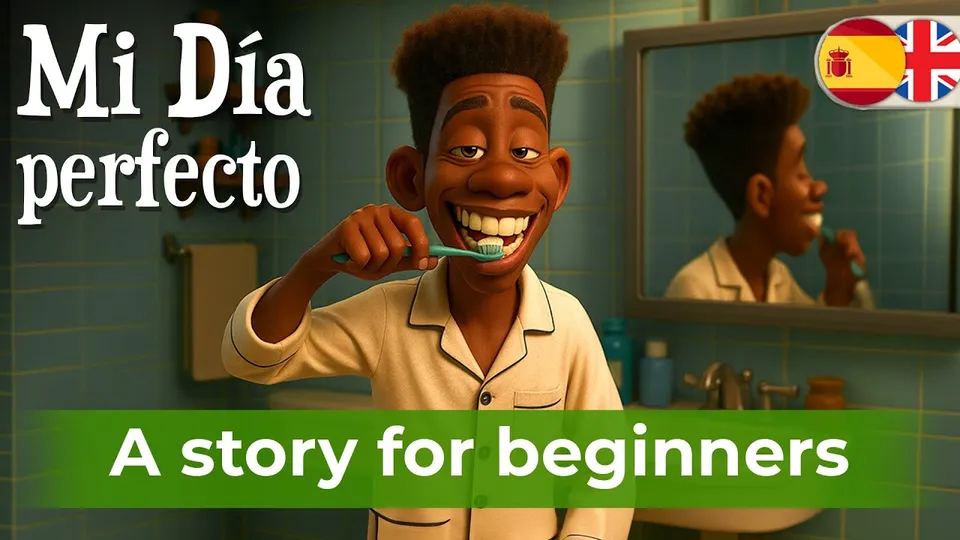
Start with: “Very Simple Spanish Story for Beginners (A1-A2): My Perfect Day” · ListenES on YouTube
Every ListenES video is one everyday story told in a fixed order, and the chapters in the description show it. First you hear the story with the Spanish line at the top of the screen. Then the same story again, now with the English translation under each Spanish line. Then once more to listen, and at the end a few questions and a vocabulary list. The pictures are animated cartoon scenes: two friends laughing over lunch in a café while the line reads “Almorzamos y hablamos de la vida.”
“My Perfect Day” is their most watched story, with more than 450,000 views, and runs 19 minutes. The level is marked A1-A2 in most titles, and the stories are about ordinary days: a bad morning, a walk to work, a lazy policeman.
3. The Comprehension Lab (ES): five-minute stories (A1-A2)
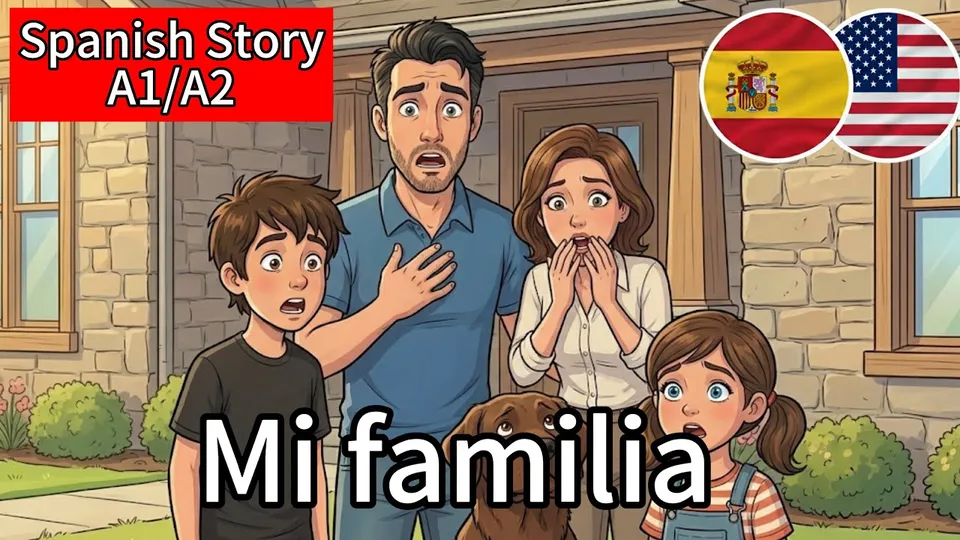
Start with: “Easy Spanish Story for Beginners A1/A2: mi familia” · The Comprehension Lab (ES) on YouTube
A small channel with about 5,000 subscribers, and it is here because of its length. Most stories take four or five minutes, which is about how long an A1 learner can listen closely before attention slips. Each line appears in Spanish at the top and in English at the bottom, over a drawn scene. After the story come a few questions on the text.
In “mi familia”, Carlos, a 45-year-old dad, walks you through a Saturday with his family: pancakes, a sleepy teenager, a dog under the table. It is in the present tense and read slowly. The channel keeps posting and has reached its 35th episode.
4. Polyglot Pages: the English and the Spanish together (A1-A2)
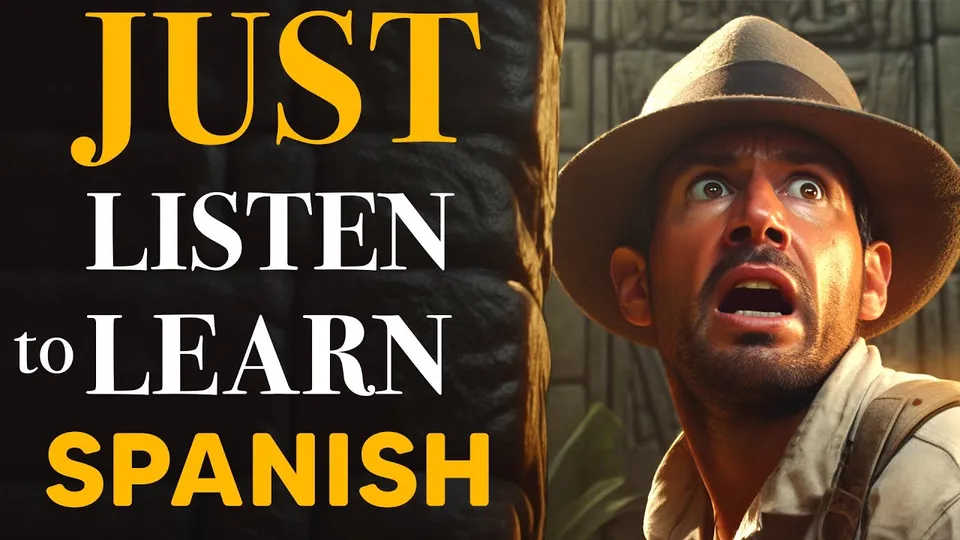
Start with: “English Spanish Translation | Bilingual stories for beginners” · Polyglot Pages on YouTube
If you searched for Spanish stories with English translation, this is the most literal answer. Polyglot Pages builds its stories from the most common Spanish words and shows every sentence twice, the English on top and the Spanish below. Now and then a single word fills the screen on its own, “miracle” above “milagro”, so the key vocabulary stands out.
Our pick is a 30-minute adventure: a man gets a mysterious letter, travels to a temple, solves a puzzle and escapes with the treasure. The channel says it uses the 500 most common words in Spanish. Longer videos promise 2,000 and 3,000 words, but start with the short one and see whether the format suits you.
5. The Fable Cottage: fairy tales in slow Spanish (A2)
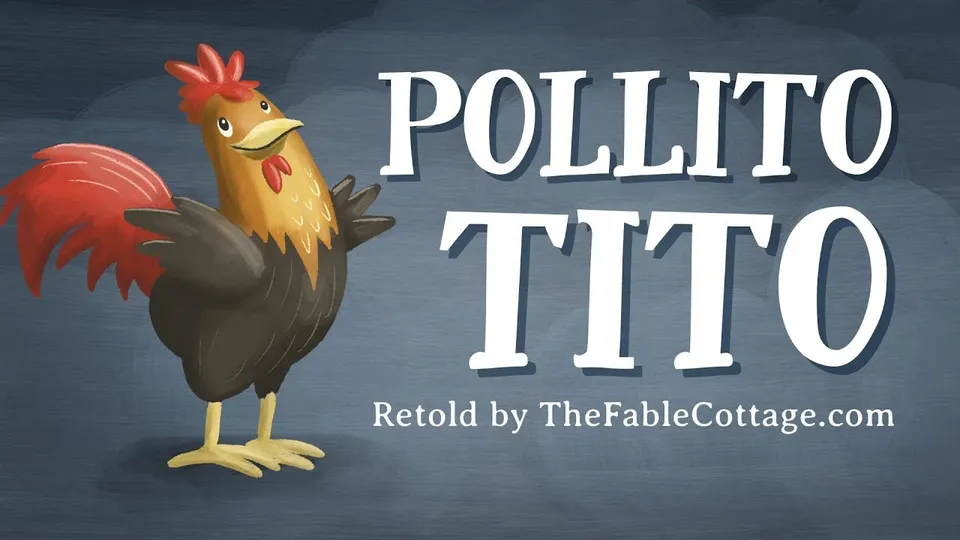
Start with: “Pollito Tito: Chicken Little in Spanish” · The Fable Cottage on YouTube
The Fable Cottage retells classic fables and fairy tales for language learners, and the Spanish ones are read slowly over hand-drawn illustrations. The picture has no text in it. Instead the channel adds its own subtitles in two tracks, Spanish and English, so you can choose to read along in Spanish or check the meaning in English.
“Pollito Tito” has more than a million views and takes five minutes. In their version, the chick reads a scary headline on the internet, “the sky is falling”, does not check the source and runs off to warn all his friends. A fairy tale is a good choice at A2: you already know roughly what happens, so you can spend your attention on the words. When it feels easy, try “El Pájaro y la Ballena”.
6. Use your Spanish: everyday stories with the text on screen (B1)
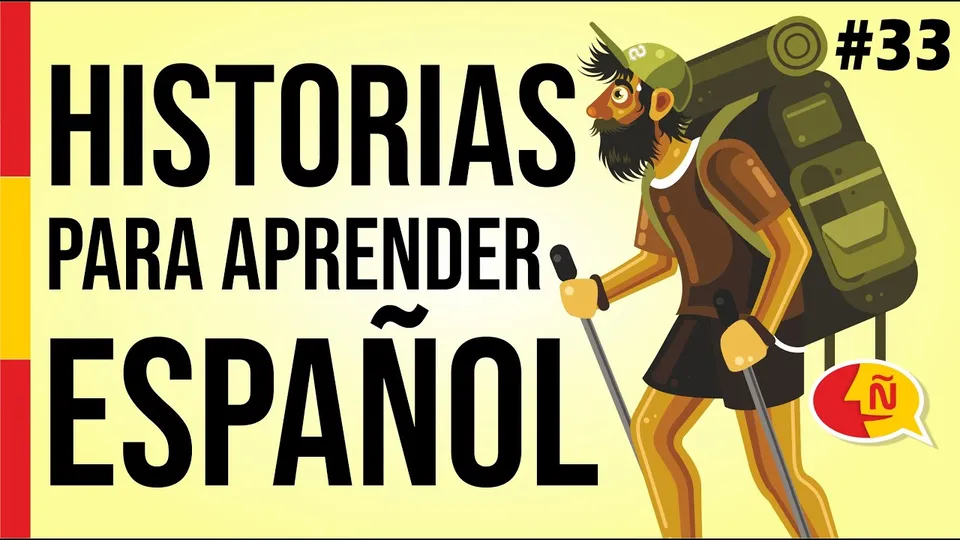
Start with: “Historias de la vida diaria #33” · Use your Spanish on YouTube
The step up from beginner stories. Each video is a first-person story from daily life, shown as a full paragraph of Spanish text on a notebook page, with the useful expressions marked in red. In #33 someone plans a Saturday hike: up early, an hour’s drive to the mountain, out of the house by seven “como muy tarde” to beat the heat. The story is read at slow speed first, then come questions, then cards that explain each expression in Spanish with English translations of the examples, and finally the story again at normal speed.
This one has been watched more than 1.7 million times and runs 21 minutes. The channel adds Spanish subtitles of its own, and the series is labelled “nivel intermedio”. If you are still at A2, the slow reading and the text on screen make it manageable. Leave the normal-speed pass for the second week.
7. Español con Juan: a story a month, told to camera (B1-B2)
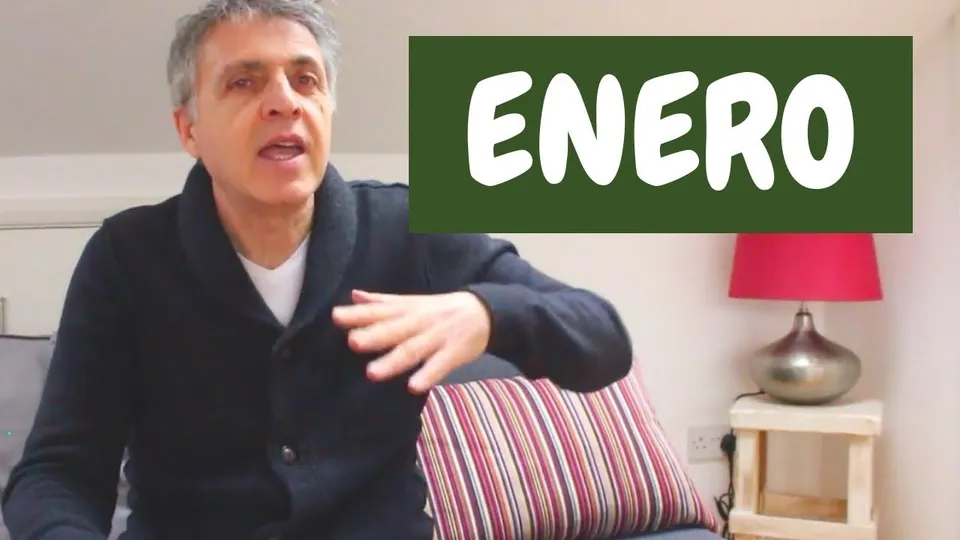
Start with: “Historias en español: enero” · Español con Juan on YouTube
Juan is a Spanish teacher with nearly 400,000 subscribers, and in 2018 he told a new story every month. There are no pictures and no text on screen, just Juan in a room telling you what happened, with his hands, his face and a lot of energy. The January one is called “Rebajas de enero”, the January sales, and runs 21 minutes.
This is where you go when the earlier channels feel slow. It is natural Spanish, spoken to learners but not simplified word by word. You won’t be left alone with it, though: the description links to a transcript with exercises, so you can read what you missed. February comes next.
How to study with a story
A story played once in the background mostly goes past you. Here is a routine for 20 minutes a day:
- Pick a story you can follow. You should get the plot on the first listen, even if many words escape you. Lost after a minute? Go one channel up the list.
- First pass: listen and read. Use the Spanish text on screen or the Spanish subtitles. Keep going even when a word is new.
- Second pass: the lines you missed. Pause on them, check the English if the video gives it, and look up only the words that block the meaning.
- Third pass: ears only. Cover the text or pick a channel like Dreaming Spanish where there is none, and listen to the same story again.
- Keep three phrases. Not a list of twenty words. Three phrases you liked, with the sentence they came from.
The same story heard three times teaches more than three new stories heard once. Come back to it a week later and you will be surprised how simple it sounds.
Once stories feel comfortable, move on to native videos. Our guide on how to learn Spanish with YouTube covers what to watch next, and learning Spanish with YouTube in PlayLingo gives you a catalog of Spanish videos sorted by level.
Read along in PlayLingo
Every channel above works in PlayLingo, and so does any other YouTube video you paste in. The app shows the Spanish line by line under the video, with a translation into your language, which helps most with Dreaming Spanish and Español con Juan, where the screen has no text. Tap a word or a phrase and Lingo explains what it means in that sentence, like “como muy tarde” in the hiking story or “suelto” when someone gets on a bus without change. Save a phrase and it comes back for review later, together with the moment in the story where you heard it.
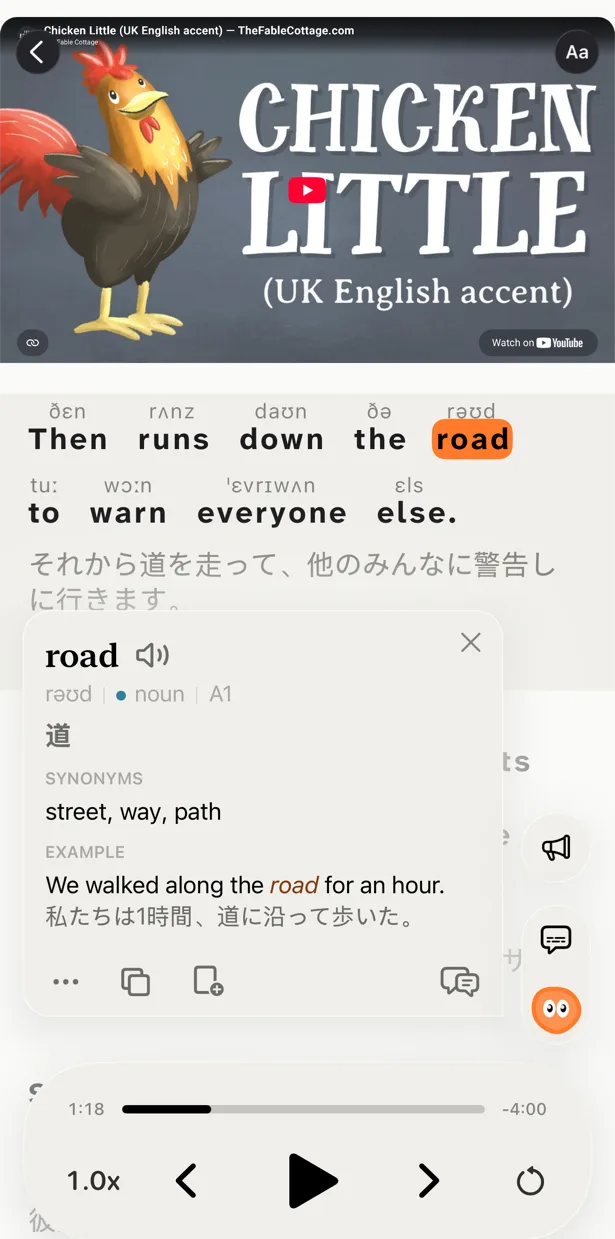
For the third pass, switch to Listen mode: the text hides, the video pauses after each line, and you can reveal a sentence word by word if you get stuck. Speak mode lets you repeat a line aloud and watch the words light up. You can also slow the video down or loop one line. PlayLingo works on iPhone, iPad, Mac and Android and is free to start, with a daily portion of practice.
Common questions
Where can I find Spanish stories for beginners with English translation?
On this list, ListenES, The Comprehension Lab and Polyglot Pages put the English translation on screen under or above every Spanish line. The Fable Cottage keeps the picture clean and adds English subtitles you can switch on.
Are there Spanish stories for A1 learners?
Yes. Dreaming Spanish’s Superbeginner stories are made for people who know almost no Spanish, and ListenES and The Comprehension Lab mark their stories A1-A2. Below A1 you will need a few weeks of a beginner course first.
Does comprehensible input work for Spanish?
Stories are the easiest kind of comprehensible input: you understand them from context, pictures and repetition rather than from grammar rules. It works best when you can follow most of the story. If you understand almost nothing, the material is too hard, not the method.
Should I read the English translation or not?
Use it to check, not to follow. Read the Spanish first and look at the English only for the lines you could not work out. If your eyes go straight to the English, cover it, or switch to a channel without it.