
Free Japanese Graded Readers, by Level

Seven free Japanese graded readers from Level Start to Level 5, roughly N5 to N1, each with furigana, an MP3 reading and a video of the book on YouTube.
Graded readers are short books written for learners, level by level, and in Japanese they are the easiest way to read a whole story at the start. Most series from publishers are paid. There is one large free library, though: the nonprofit NPO多言語多読 (Tadoku) puts 143 of its graded readers online, from picture books with a handful of words to shortened Natsume Soseki.
In November 2026 we went through that library level by level. For each of its seven levels we picked one book, opened its pages and checked the video version on YouTube. Below is that ladder, with what the levels mean and where to go when you run out of books.
At a glance
- Level Start: 赤い・・・ (Red...), 11 pages, under 3 minutes of audio
- Level 0: カラスと水さし (The Crow and the Water Jug), an Aesop fable
- Level 1, about N5: おばあちゃんがいない (Grandma Is Not Here)
- Level 2, about N4: 山田さんの大問題 (Mr Yamada's Big Problem), a funny story about kanji
- Level 3, about N3: 野ばら (The Wild Rose) by Ogawa Mimei, shortened
- Level 4, N3-N2: 日本のバレンタインデー (Valentine's Day in Japan), non-fiction
- Level 5, N2-N1: 夢十夜 (Ten Nights of Dreams) by Natsume Soseki, two of the nights
The JLPT levels are the ones Tadoku gives on its levels page. Every book here has furigana, a free MP3 and a video on YouTube.
How the Tadoku levels work
Each level adds words and grammar. Level Start uses about 200 words and stays under 200 words per book. Level 0 uses about 350 words, and the story is told mostly through pictures. Level 1 keeps the same vocabulary in longer stories, up to 1,500 words, and all three stay with です and ます. Level 2 brings in the dictionary form and the て-form, Level 3 conditionals like ~たら and ~ば, Level 4 the causative and ~らしい. At Level 5 a book can run to 25,000 words, and kanji that Japanese children learn by the end of second grade no longer get furigana.
On every book page you can read the pages right on the site, download a PDF for your screen or for printing, get the MP3, or watch the book on YouTube. You don't need an account.
1. 赤い・・・: a first book you can read in two minutes (Level Start)
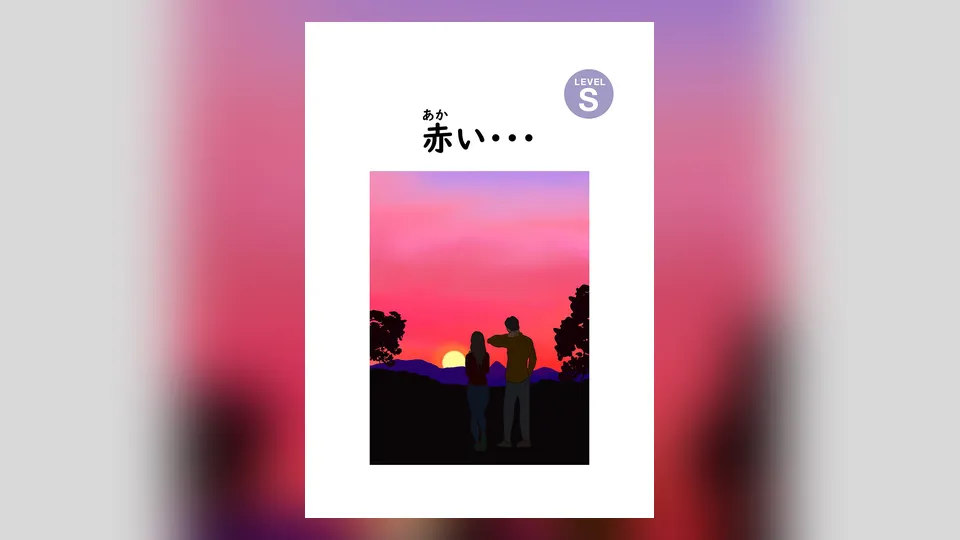
Start with: “【Level Start】赤い・・・” · NPO多言語多読 on YouTube
Red things: a red tomato, red strawberries, red lipstick. Each page has a picture and a line or two, such as 赤い口紅 and 化粧します, so the picture tells you what the words mean. Then two people who both love red meet. That's the whole plot, and it is enough to finish a book on your first day.
It is the most watched video in Tadoku's YouTube playlist of free books, with almost 25,000 views, and it runs 2 minutes 54 seconds. Members of the NPO wrote it in one of their workshops. Read it once with the audio, then once without.
2. カラスと水さし: an Aesop fable in simple Japanese (Level 0)
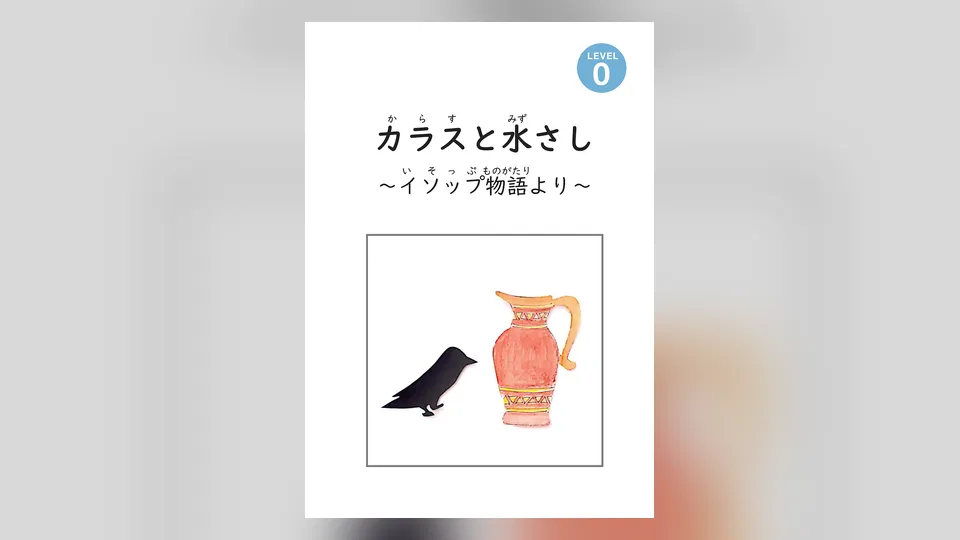
Start with: “【Level 0】カラスと水さし ~イソップ物語より~” · NPO多言語多読 on YouTube
It's a hot day, a crow is thirsty, and the water jug it finds is almost empty. If you know the fable, you know what the crow does next, and that is the point: at Level 0 you can follow the story from what you already know and from the drawings. Halfway through, a page shows the crow carrying pebbles over the words たくさん、はこびます.
The book has 12 pages and the video lasts a little over three minutes. Level 0 is the largest shelf in the library, with 37 free books, so if this one feels easy, you can read ten more at the same level before moving on. That is how tadoku is meant to work.
3. おばあちゃんがいない: a short story with a small mystery (Level 1, about N5)
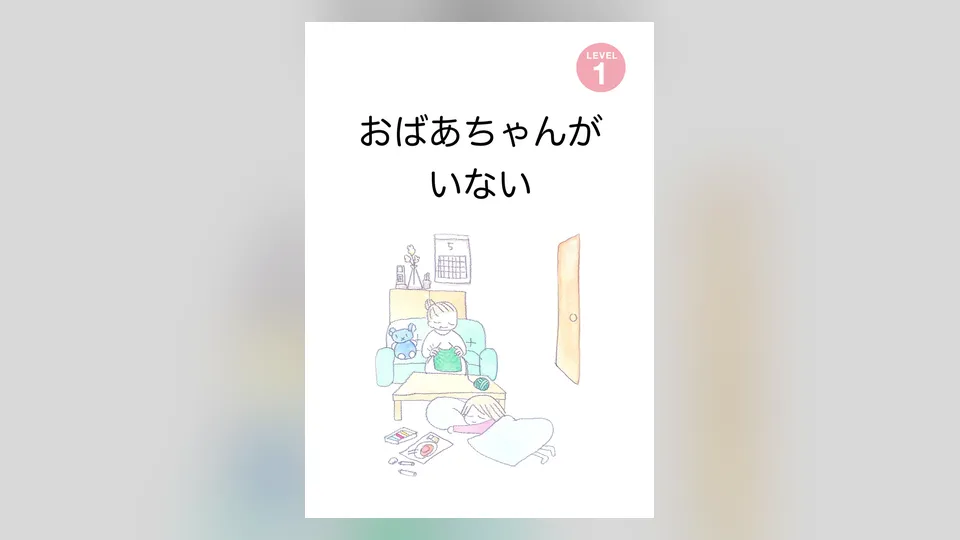
Start with: “【Level 1】おばあちゃんがいない” · NPO多言語多読 on YouTube
Chihiro stays the night at her grandmother's house on her own for the first time. Then Chihiro wakes up from a nap and her grandmother is gone. Students at Tsuda University wrote it, and it is one of the newest books in the library, from 2025.
The text is only 278 characters over 17 pages, but now it is a story with a question in it, and you want to turn the page. Sentences stay short: チヒロは、庭へ行きました。おばあちゃんは、いません。 The video is a bit over five minutes.
4. 山田さんの大問題: a funny story about kanji (Level 2, about N4)
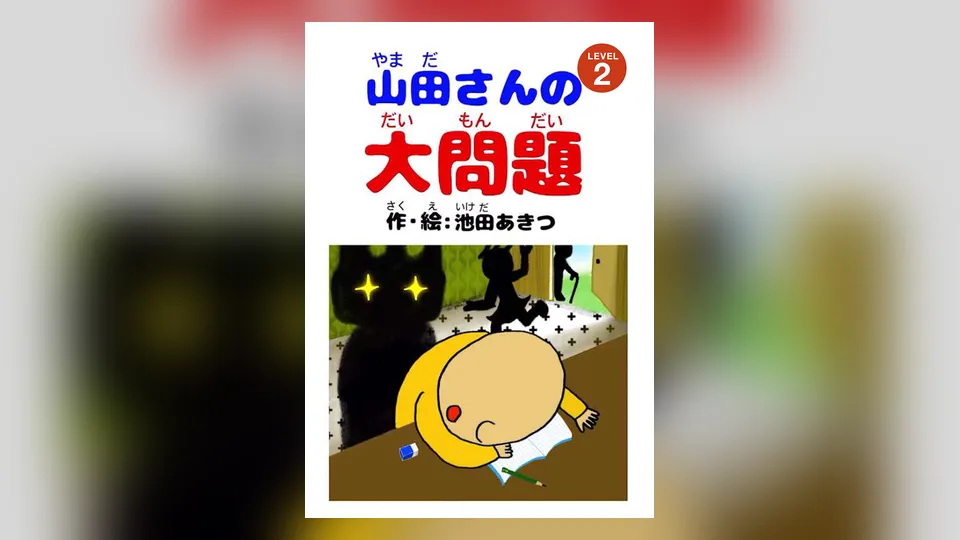
Start with: “【Level 2】山田さんの大問題” · NPO多言語多読 on YouTube
Some strange people come to Maruo's house, and their faces look oddly familiar. We won't spoil why. Tadoku's own blurb says the book is for people who like kanji and for people who don't, and the drawings, close to manga, make the joke work.
This one is printed in vertical lines, top to bottom and right to left, so it is a good place to get used to how most Japanese books look. The video is about eight minutes.
5. 野ばら: a classic children's story, shortened (Level 3, about N3)
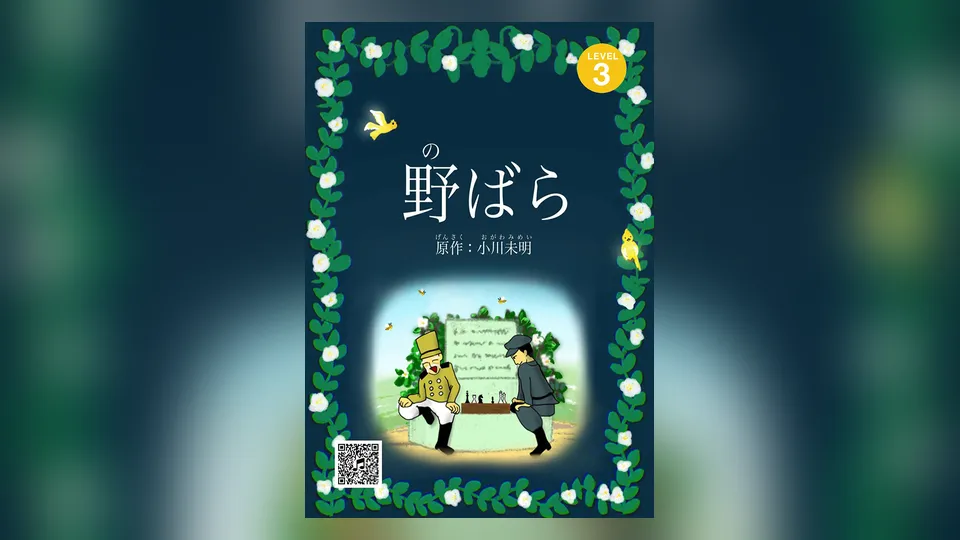
Start with: “【Level 3】野ばら” · NPO多言語多読 on YouTube
This is a story by the children's writer Ogawa Mimei: two soldiers, one from a big country and one from a small country, spend their days side by side in a place where wild roses bloom. They become friends. Then their countries go to war. Ikeda Akitsu, who wrote the Level 2 book above, shortened it and drew the pictures.
From here the books feel different: more text on a page and fewer pictures. It is 19 pages, and the reading takes about ten minutes. If you finish it without a dictionary, you are reading real literature, even if it's a shortened version.
6. 日本のバレンタインデー: non-fiction for a change (Level 4, N3-N2)
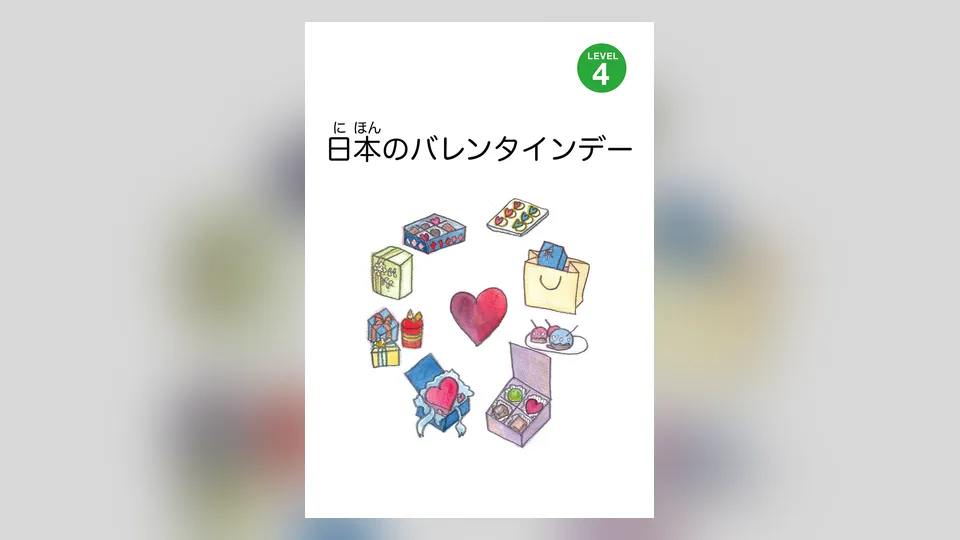
Start with: “【Level 4】日本のバレンタインデー” · NPO多言語多読 on YouTube
In Japan, women give chocolate to men on Valentine's Day, and the chocolate has different names depending on who gets it. This book explains them, including 義理チョコ, the chocolate you give coworkers as thanks. Students at Tsuda University wrote it too.
It is 1,202 characters on 12 pages, so it's a short read for Level 4, and the video is under six minutes. We put it here on purpose: after six stories, a text that explains something real is a different kind of reading. At this level katakana no longer has small readings printed next to it.
7. 夢十夜: Natsume Soseki, two of the ten dreams (Level 5, N2-N1)
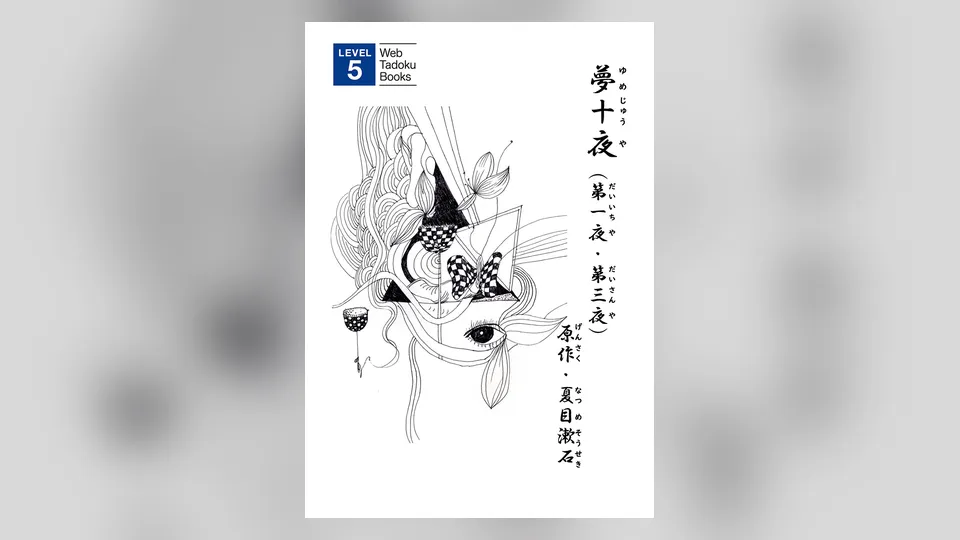
Start with: “【Level 5】夢十夜” · NPO多言語多読 on YouTube
Soseki wrote ten short, strange dreams. This edition keeps two of them: the first night, a love story, and the third, which is unsettling and a little scary. Iwasaki Yoko shortened the text, and the ink drawings are by 茆一霖.
The reading is the longest in this list, about 18 minutes. Level 5 is also the smallest shelf, only four free books. When it feels comfortable, try the original: the book page links to the full text of 夢十夜 on Aozora Bunko.
How to read graded readers in Japanese
Tadoku has four rules, and they fit on one line each.
- Start with very easy books. Even if you have passed N4, read a few Level 0 books first. Reading fast and without effort is the goal.
- Don't use a dictionary. Guess from the pictures and the story.
- Skip what you don't understand. A word, a sentence, sometimes a page.
- When a book is hard going, put it down and take another. There are 143 to choose from.
Tadoku also suggests reading while you listen. In practice that means: play the MP3 or the video once and follow the text, then read the book again on your own. More than a hundred of the free books have a recording. One note on the license: the books are CC BY-NC-ND, so you can share and print them, but not change them or add translations.
If you would rather watch than read, our list of YouTube channels to learn Japanese goes from hiragana to native shows, and this guide covers anime with Japanese subtitles.
Where to find more Japanese reading
Tadoku's YouTube channel has a playlist for each level, so you can play the books one after another. Yomujp (日本語多読道場) has short articles sorted by JLPT level, from N6 to N1, with audio. New articles are free for four weeks after they come out, and the archive needs a subscription. Aozora Bunko has Japanese classics whose copyright has expired, free and in the original rather than shortened; 「ごん狐」 by Niimi Nankichi, first published in 1932, is a short one. Paid graded readers exist too, for example the series にほんご よむよむ文庫 from the publisher ASK, which Tadoku quotes on its levels page.
Read Japanese with a translation under every line in PlayLingo
When you move on from graded readers, PlayLingo can help with real Japanese. Search for a public-domain classic or open your own EPUB, PDF or a photo of a page. The book is shown sentence by sentence with a translation into your language under each line, and a voice can read it aloud while the current word lights up.
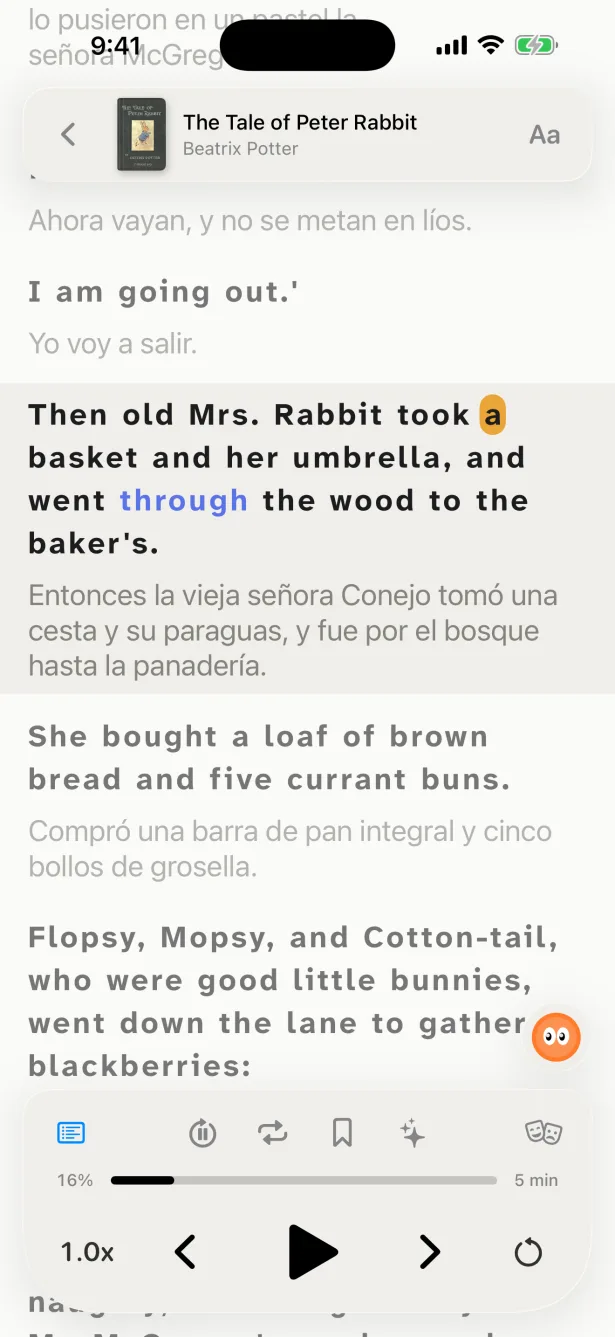
The same works for Japanese YouTube videos: paste a link and you get the subtitles line by line with a translation. Tap a word or a phrase and Lingo explains what it means in that sentence. Save it, and it comes back for review with the sentence where you found it. PlayLingo works on iPhone, iPad, Mac and Android and is free to start, with daily limits. More on reading: read books with translation.
Common questions
Where can I find free Japanese graded readers?
The largest free library is Tadoku's, at tadoku.org: 143 graded readers from Level Start to Level 5, readable online or as PDFs, most of them with a free MP3 and a YouTube video.
What are Japanese graded readers Level 0?
In Tadoku's system, Level 0 is the second step: about 350 words, 200-400 words per book, polite です/ます forms, and pictures that carry the story. Before it there is Level Start, for complete beginners.
Which graded readers match JLPT N5?
Tadoku puts its Level 1 at N5 and Level 2 at N4. If you are studying for N5, read Level 0 and Level 1 books, such as おばあちゃんがいない.
Do Japanese graded readers have audio?
Many do. On Tadoku, more than a hundred of the free books come with an MP3 reading and a video on YouTube that shows the pages as they are read.