
8 YouTube Channels to Learn Japanese, by Level

Eight YouTube channels for learning Japanese, from hiragana to sketch comedy, sorted by level, with what text each one shows on screen.
Japanese makes you wait longer than most languages before real videos make sense. There are two alphabets to learn before you can read a single subtitle, then kanji, and then the gap between textbook Japanese and the way people talk. YouTube covers every one of those stages. The problem is that most lists of “best channels” put a hiragana lesson next to a podcast for advanced learners and leave you to guess which comes first.
So we sorted them by level. In October 2026 we opened every channel below and the video we recommend from it, and looked at what you actually see on screen: kana, kanji with furigana, English, or nothing at all. We also checked which channels write their own subtitles and which leave you with YouTube’s automatic captions.
At a glance
- Before A1, kana: JapanesePod101
- A0-A1: Japarrot!
- A1-A2, grammar: Japanese Ammo with Misa
- A1-A2: Bluey in Japanese
- A2: Japanese with Shun
- B1: Speak Japanese Naturally
- B2: Koh Kentetsu Kitchen
- C1: JARUJARU TOWER (ジャルジャルタワー)
1. JapanesePod101: all of hiragana in one hour (before A1)

Start with: “Learn ALL Hiragana in 1 Hour - How to Write and Read Japanese” · JapanesePod101 on YouTube
Every other channel on this list assumes you can read hiragana, so this comes first. The video opens with a short overview of the three writing systems and then goes row by row: the vowels, the K row, the S row, all the way to わ and ん. Characters and practice words appear large on a white screen, for example おちつく. It has been watched more than 18 million times.
Don’t try to swallow it in one sitting. The chapters follow the rows, so one or two rows a day with a pen and paper is a good pace. When hiragana feels solid, the same channel has a one-hour katakana video built the same way.
2. Japarrot!: short illustrated stories with kana under each line (A0-A1)
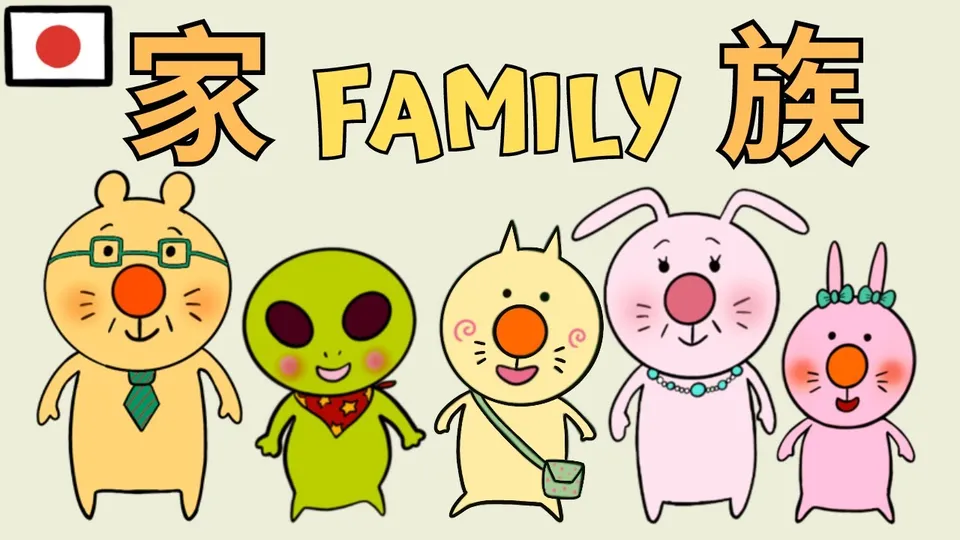
Start with: “Japanese Listening Practice With A Story #1 | Family [Beginner Level 1]” · Japarrot! on YouTube
Six-minute stories drawn as cartoons, made for people in their first weeks of Japanese. The first one is about family words, including the part textbooks skip: you call your own family members one thing and someone else’s another. Each line is printed in Japanese under the picture, with the English above it, like はじめまして and “How do you do?”. With 2.5 million views, it is the channel’s most watched video.
Every story is played twice. First with no subtitles, so you find out how much you catch by ear, then again with subtitles and explanations. The series is short, ten stories so far, among them conveyor belt sushi and a convenience store. The channel writes its own Japanese and English subtitles.
3. Japanese Ammo with Misa: grammar explained in English (A1-A2)
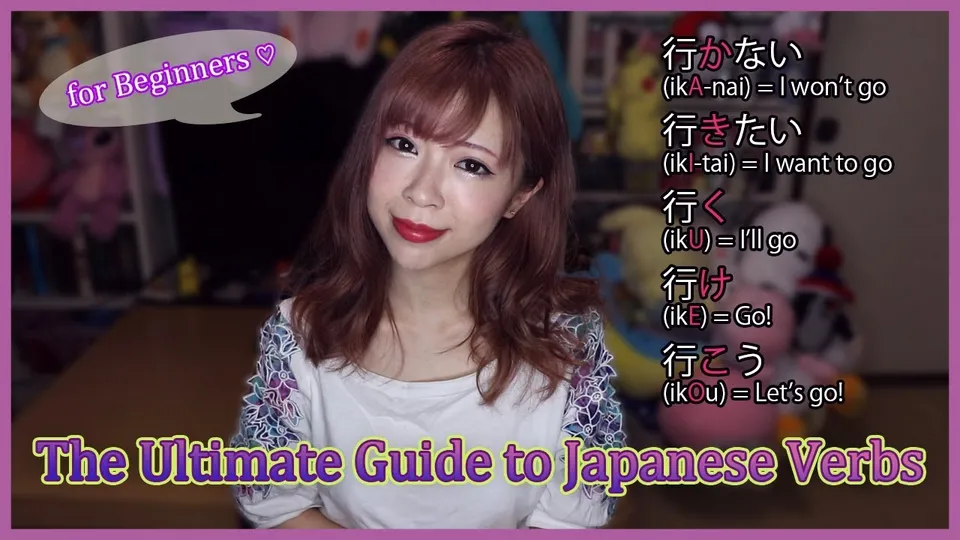
Start with: “The Ultimate Guide to Japanese Verbs for Beginners (Let's, Want to, Don't...)” · Japanese Ammo with Misa on YouTube
Stories give you a feel for the language, but at some point you want someone to explain why a verb changes its ending. Misa does that in English, at length and with a lot of examples. This 35-minute video covers how verbs conjugate and how to say “I want to”, “I don’t”, “I did”, “I have to” and “let’s”, in both polite and casual speech. Each example appears on screen in kanji with furigana, in romaji and in English: 書く, kaku, “to write”.
It has over a million views. If you like the format, the description links to her playlist for absolute beginners, and the channel goes on to JLPT N3 grammar. The subtitles are YouTube’s automatic ones, but the key words are already on screen.
4. Bluey in Japanese (ブルーイ): a cartoon for your ears (A1-A2)

Start with: “ブルーイと旅する 🚗💙 | フルエピソード” · Bluey Japan on YouTube
This is native Japanese, not a lesson. The official Japanese Bluey channel, run by BBC Studios, posts compilations of the cartoon dubbed for Japanese children. The one we recommend is a 34-minute set of episodes about family trips by car and has been watched almost 3 million times. Families, games and car journeys: the pictures carry most of the plot, which is what makes it watchable this early.
A fair warning: there is no text on screen and the channel adds no subtitles, only YouTube’s automatic Japanese captions. Treat it as listening practice. If you already know the English episodes, even better, because you will know what is happening before anyone speaks.
5. Japanese with Shun: real conversations, labelled by JLPT level (A2)
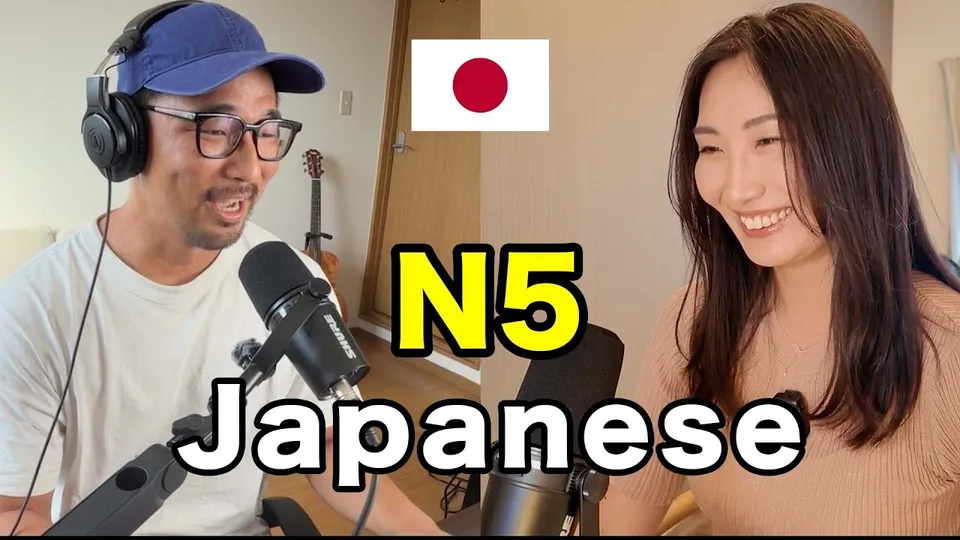
Start with: “Talking Daily Routines with Sayuri Saying (N5 Japanese Conversation)” · Japanese with Shun on YouTube
Shun puts the JLPT level in many of his titles, from N5 up to N3-N2, which makes it easy to find your place. In the video we recommend he talks with his guest Sayuri about their daily routines, in easy N5 Japanese. Two people, two microphones, a 19-minute conversation. It came out in July 2026 and has over 380,000 views.
The text is built into the video. The line being spoken runs along the bottom in Japanese, and new words pop up with their reading and an English meaning: 動画(どうが), “videos”, 編集する, “to edit”. When N5 feels comfortable, the channel has longer N3-N2 conversations and easy street interviews.
6. Speak Japanese Naturally: everyday Japan, narrated for learners (B1)
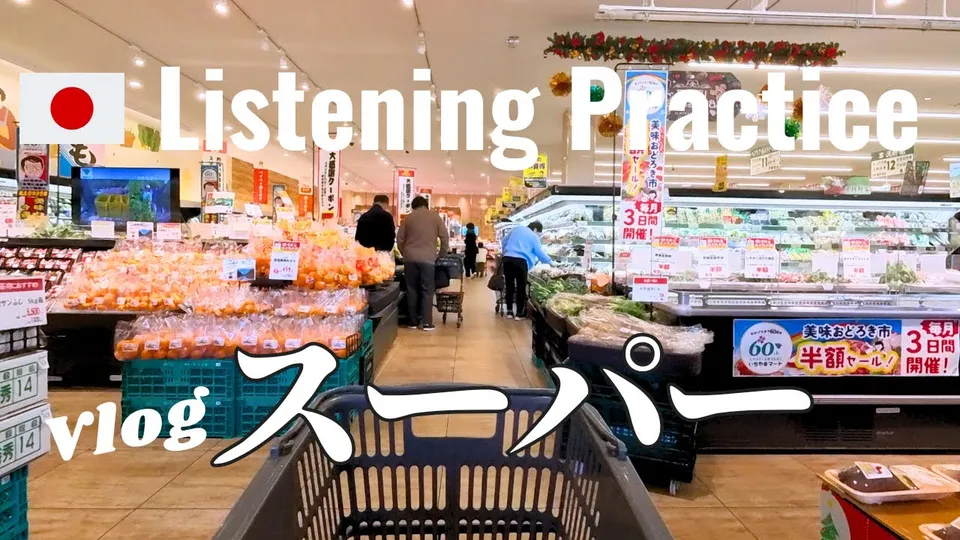
Start with: “Japanese Listening Practice | Supermarket and Christmas in Japan” · Speak Japanese Naturally on YouTube
Vlogs filmed in ordinary places, narrated in Japanese for learners. This 18-minute one takes you shopping in a Japanese supermarket. In the wine section the narration explains that Yamanashi makes more wine than any other prefecture, and the sentence is printed on screen with furigana over every kanji. This is where you start reading kanji in context without a dictionary for each word.
The video has close to 850,000 views, and the channel writes its own Japanese and English subtitles. Other episodes in the same series follow a day in Ginza in a kimono, an afternoon in Shirakawa-go and a work day in Tokyo.
7. Koh Kentetsu Kitchen: a cooking show for Japanese viewers (B2)
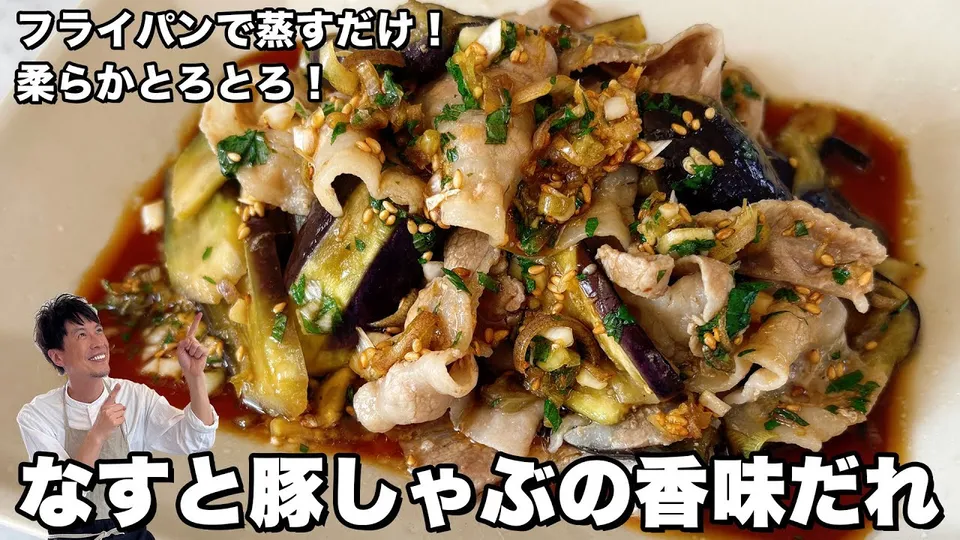
Start with: “フライパンで蒸すだけ!柔らかとろとろ!なすと豚しゃぶの香味だれの作り方” · Koh Kentetsu Kitchen on YouTube
Koh Kentetsu is a cooking expert with 2.3 million subscribers, and nothing on his channel is simplified for learners. He cooks for Japanese home cooks and explains as he goes. The recipe we picked, eggplant and thinly sliced pork steamed in a frying pan with a sauce, has more than a million views and is split into chapters: opening, preparation, cooking, tasting.
There is no text on screen, only automatic captions, so it is a listening exercise in Japanese made for Japanese viewers. What makes it manageable is that the camera shows every step, so the pictures help when the words run ahead of you. The ingredient list in the description is in Japanese, with amounts like 大さじ2, two tablespoons, and works as a small reading text before you press play.
8. JARUJARU TOWER (ジャルジャルタワー): sketch comedy, the final exam (C1)
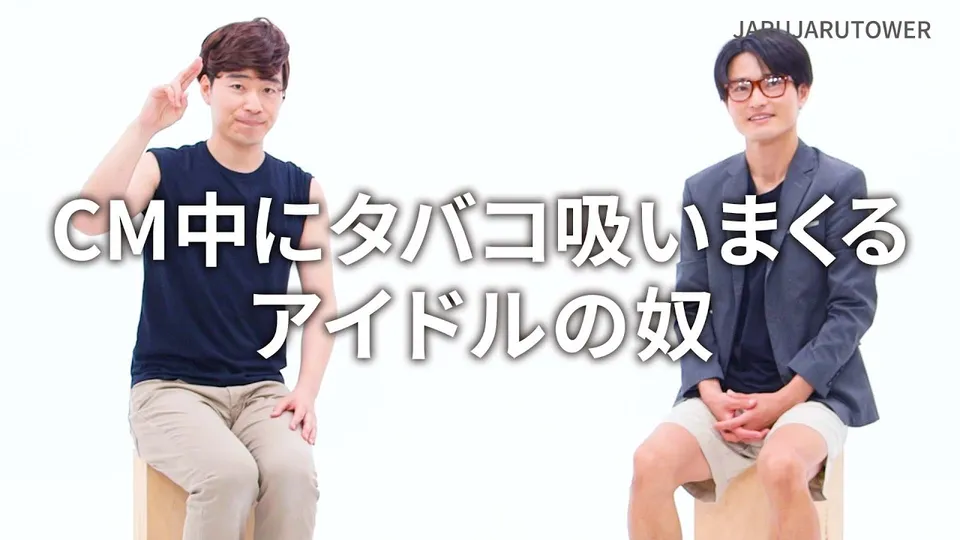
Start with: “『CM中にタバコ吸いまくるアイドルの奴』ジャルジャルのネタのタネ” · JARUJARU TOWER on YouTube
The official channel of the comedy duo JaruJaru, with 1.7 million subscribers. They post short sketches built from ideas in their notebooks, a new one every day, more than 8,000 so far by their own count. Every title follows the same pattern: “the guy who…”. In this one, an idol smokes nonstop during the commercial breaks of a TV show.
The setting is two men on a white background, sometimes on wooden boxes, and nothing else. No props to help you, no text on screen, only automatic captions. Everything is carried by the dialogue and the timing. If you follow a JaruJaru sketch and laugh at the right moment, you understand spoken Japanese the way Japanese people do.
How to study with a Japanese YouTube video
Hours of background Japanese help less than you would hope. A focused 20 to 30 minutes with one video gets more done:
- Pick your level honestly. If you understand less than about half after two minutes, go one channel back on this list.
- First pass with Japanese text. Japanese subtitles or on-screen text, not English. You want to link the sound to kana and kanji, not to a translation.
- Second pass on the hard lines. Replay what you missed and look up only the words that block the meaning.
- Third pass by ear. Turn the text off and listen to the same part again.
- Say it out loud. Repeat three or four lines after the speaker, copying the rhythm as well as the words.
Japanese has a lot of words that sound alike and are told apart by context or kanji. The second pass is where you catch them.
Beyond learner channels
From around B1, anime becomes a real study option instead of a reward. We wrote a separate guide on learning Japanese with anime and subtitles. And learning Japanese with YouTube in PlayLingo gives you a catalog of Japanese videos sorted by level.
Watch with interactive subtitles in PlayLingo
Every channel above works in PlayLingo, and so does any other YouTube video you paste in. The app shows the Japanese line by line under the video, with a translation into your language. Tap a word or a phrase and Lingo explains it in the context of that sentence: why a verb ends the way it does, what a casual phrase in a JaruJaru sketch means. Save a phrase and it comes back for review later, together with the moment from the video where you heard it.
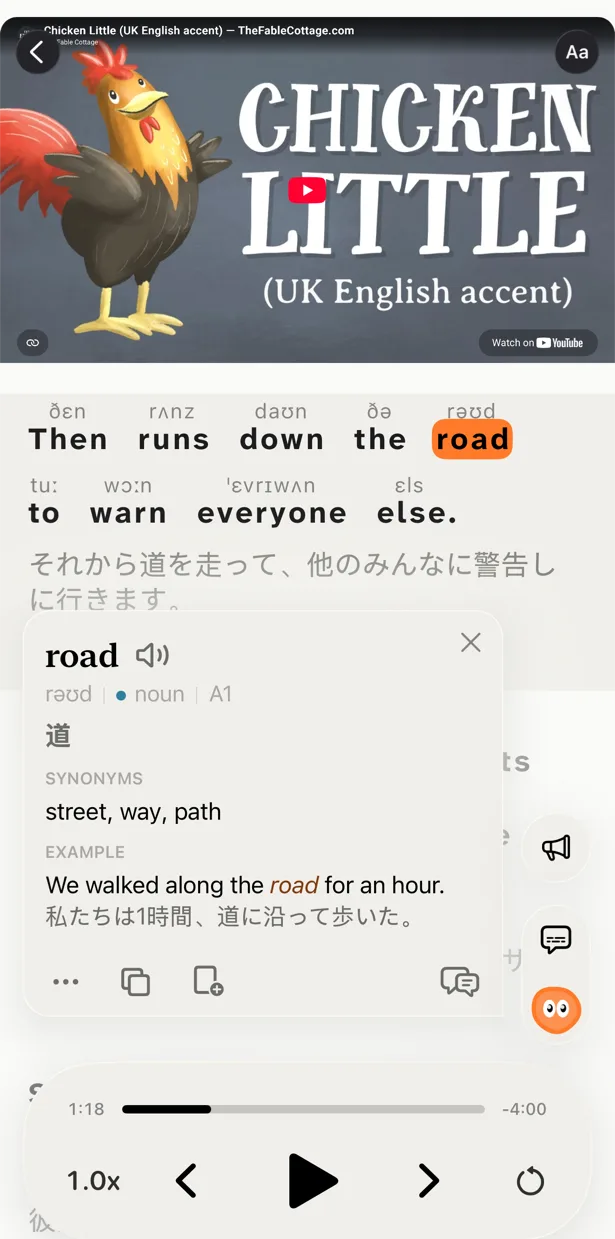
For the third pass, switch to Listen mode: the text hides, the video pauses after each line, and you can reveal a sentence word by word. Speak mode is for the last step: say the line aloud and watch the words light up. You can also slow the video down or loop one line. PlayLingo works on iPhone, iPad, Mac and Android and is free to start, with a daily portion of practice.
Common questions
What is the best YouTube channel to learn Japanese from scratch?
Start with JapanesePod101 for hiragana and katakana, then Japarrot! for your first stories. Both are made for people who know no Japanese at all. Add Japanese Ammo with Misa when you want the grammar explained in English.
Can you learn Japanese on YouTube?
You can get far with listening and reading on YouTube, especially if you follow the levels and rewatch what you study. Most learners still use a textbook or a course for grammar and kanji alongside it, and look for speaking practice with people once they reach A2-B1.
Should I watch with Japanese or English subtitles?
Japanese, as soon as you can read kana. English subtitles let you follow the plot, but your eyes stay on English. Channels that print furigana over kanji, like Speak Japanese Naturally, let you read along even before you know the kanji. Use English only to check a line you could not work out.
Do I need to learn hiragana before watching Japanese videos?
Yes. Hiragana and katakana come first, in short daily sessions, and almost every channel on this list shows Japanese text on screen. Romaji helps for a few days and then gets in the way.