
7 YouTube Channels to Learn German, by Level

Seven YouTube channels for learning German, from a first lesson in English to kids' news and sketch comedy, sorted by level, with what each shows on screen.
German makes you wait. In “Ich bin gestern zurück aus dem Urlaub gekommen”, the verb that tells you what actually happened comes last, after the time and the place. On top of that come long compound nouns like “Einkaufswagen”, and three genders that change the shape of every article. On a page you can stop and work it out. When someone is talking, the sentence is over before you have found the verb. Listening takes hours of practice, and YouTube has plenty of them, as long as the video fits your level.
Most lists of German channels mix a grammar course for beginners with a political commentator and leave the order to you. We sorted ours by level. In November 2026 we opened every channel below and the video we recommend from it, and wrote down what you see on screen: German, German with English, or nothing. We also checked which channels write their own German subtitles and which leave you with YouTube’s automatic captions.
At a glance
- From zero, taught in English: Learn German with Anja
- A1: Nicos Weg (Deutsch lernen mit der DW)
- A2: Easy German
- A2-B1: Die Maus
- B1: logo!
- B2: MrWissen2go
- C1: Knallerfrauen
1. Learn German with Anja: first phrases explained in English (from zero)
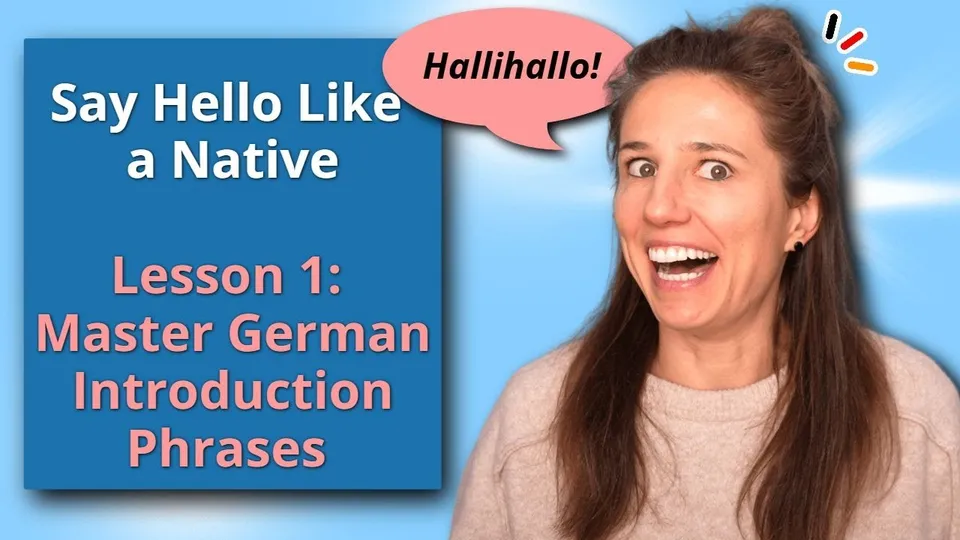
Start with: “Learn German Greetings FAST! Essential Phrases You Need!” · Learn German with Anja on YouTube
Anja describes herself as “a teacher from Germany who teaches German in an un-German way”, and 1.37 million subscribers seem to like the result. The greetings video runs just under nine minutes. She asks the question in English, “how do you say good day?”, then gives the answer in German and repeats it: “Guten Tag. Guten Tag.” From there she moves on to “Wie geht es Ihnen?” and introducing yourself.
The phrases are printed large in the picture, German in white and the English in yellow underneath, like “Ich komme aus Kanada.” and “I come from Canada.” The channel did not write its own subtitles, so the text in the picture is what you read. Her most watched videos are practical: a German supermarket survival guide, words for the bakery, how to order in a restaurant. Newer ones work on verbs that learners mix up.
2. Nicos Weg: a film course in German only (A1)
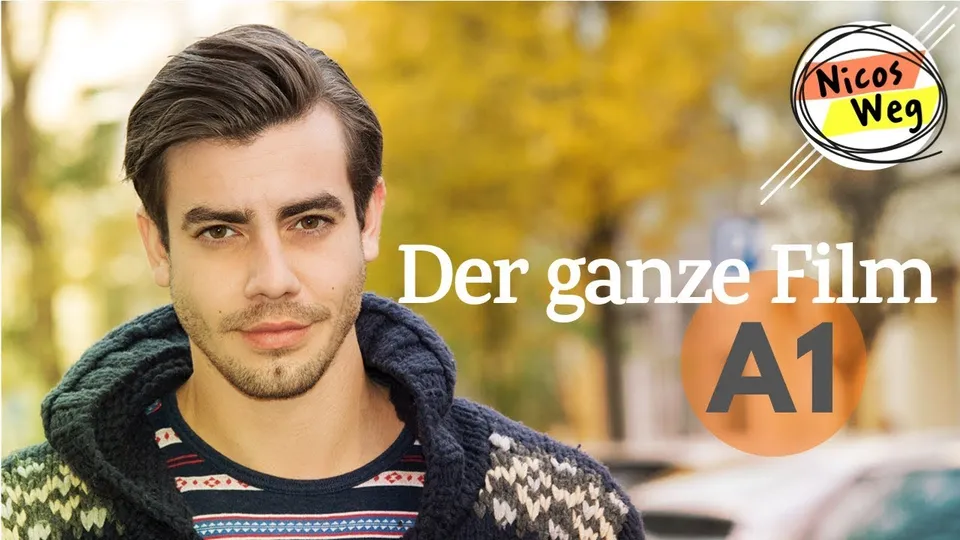
Start with: “Deutsch lernen (A1): Ganzer Film auf Deutsch - "Nicos Weg"” · Deutsch lernen mit der DW on YouTube
Nicos Weg is a free course from Deutsche Welle, Germany’s international broadcaster, told as a series. Nico is from Spain, arrives in Germany and can barely speak German. The episodes are short, the first one lasts a minute and a half, and DW also cut all of A1 into a single film of 1 hour 43 minutes. That film has 42.6 million views, more than anything else on this list. It opens with greetings: “Guten Morgen, Herr Müller, wie geht es Ihnen?”, “Hallo, Opa!”
Nothing is printed in the picture. Instead the channel wrote subtitles in German and in 18 other languages, English, Spanish, Turkish, Arabic and Ukrainian among them, so you can check a line in your own language and switch back to German. There are films for A2 and B1 as well, and the course site learngerman.dw.com adds exercises and grammar for each episode.
3. Easy German: slow German in real places, with both languages on screen (A2)
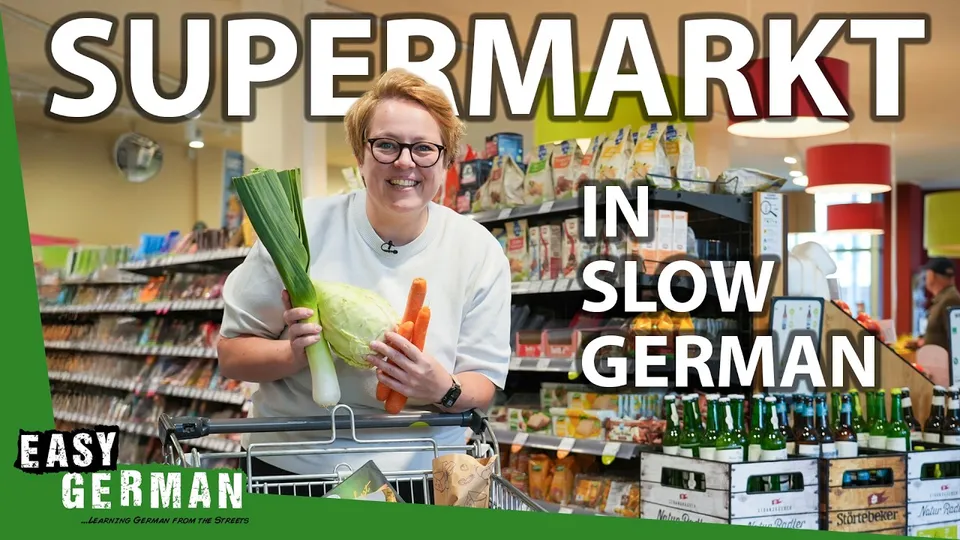
Start with: “Supermarket in Slow German (for Beginners)” · Easy German on YouTube
Easy German is the biggest channel here, with 3.38 million subscribers. Its slow series, Super Easy German, takes you somewhere ordinary and talks you through it. In the supermarket episode, Janusch has just come back from holiday, his fridge is empty, and he needs everything. The first question is a useful one for any shop: “Einen Einkaufskorb oder einen Einkaufswagen?” Fifteen minutes later you know the aisles.
The lines are printed in the picture in German with the English under it, “Superlecker.” and “So delicious.”, and the description links a free worksheet for the episode. Some titles now carry a level, A2 or B1, which saves guessing. When the slow series gets easy, try the street interviews, where the team asks strangers how much they pay for rent in Munich and you hear whoever happens to walk by.
4. Die Maus: how things work, explained to children (A2-B1)
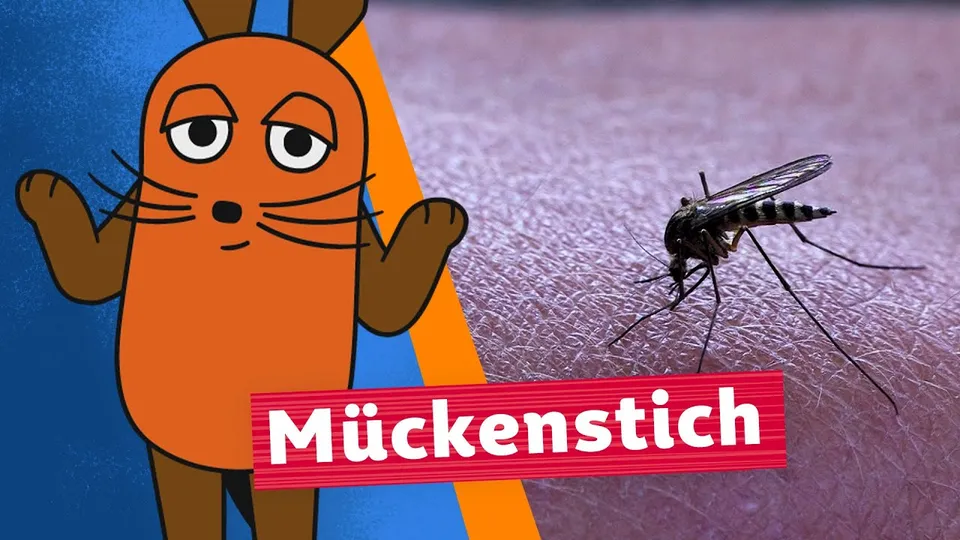
Start with: “Warum sticht die Mücke?” · Die Maus on YouTube
Die Sendung mit der Maus is a German children’s programme from the broadcaster WDR, and its channel has 707,000 subscribers. This is where you move from lessons to German made for Germans, only for a younger audience. The short films answer one question each: why mosquitoes bite, how a battery works, what vehicles a fire brigade has. That last one has 3.5 million views. A narrator explains while the camera shows, in plain sentences: “Das ist Gregor. Der liegt im Bett und schläft oder besser gesagt: Er will schlafen.”
The mosquito film is five minutes long, and you watch the insect up close while you hear about it. There is no text in the picture, but the channel wrote its own German subtitles, and the narration is calm and clear, because it is made for children. Newer videos form a series on how everyday things are made: yeast, window glass, railway tracks.
5. logo!: the news, made for children (B1)
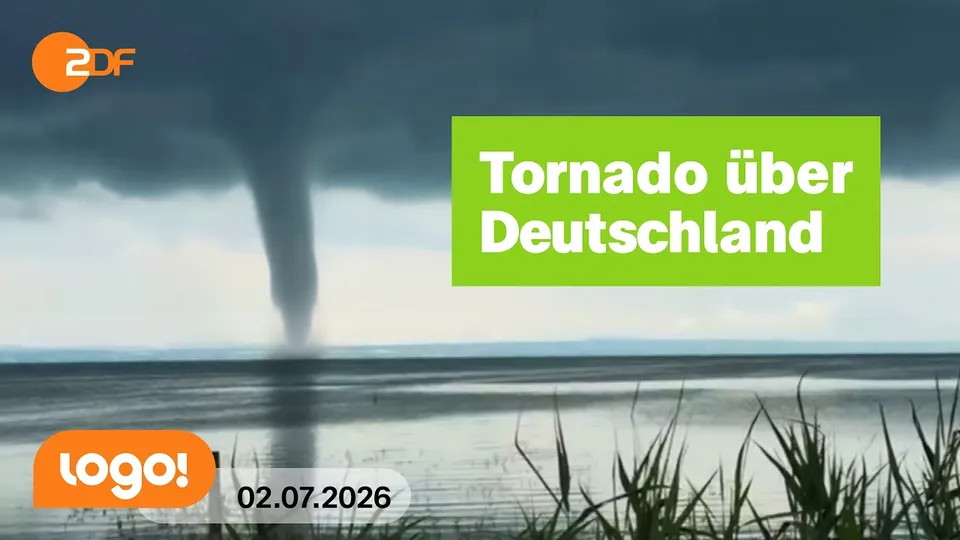
Start with: “Seltenes Naturphänomen am Bodensee: So entsteht ein Tornado” · logo! on YouTube
logo! is the children’s news of ZDF, one of Germany’s two big public broadcasters. Every day a presenter goes through what happened in the world and explains it for children. For a learner, that means real news vocabulary in short sentences. In the episode we picked, from July 2026, the government’s reform plan comes with an explanation of bureaucracy: “Das heißt, dass die Firmen weniger Formulare ausfüllen müssen.”
The episode lasts 11 minutes and is split into chapters, from the reforms and the housing shortage to a tornado on Lake Constance, puffer fish in Greece and the weather. Explainer segments use simple drawings, and the German subtitles are the channel’s own. You hear about the same topics as adult Germans that week, in simpler words. With 124,000 subscribers, it is the smallest channel on the list.
6. MrWissen2go: politics and current affairs at native speed (B2)
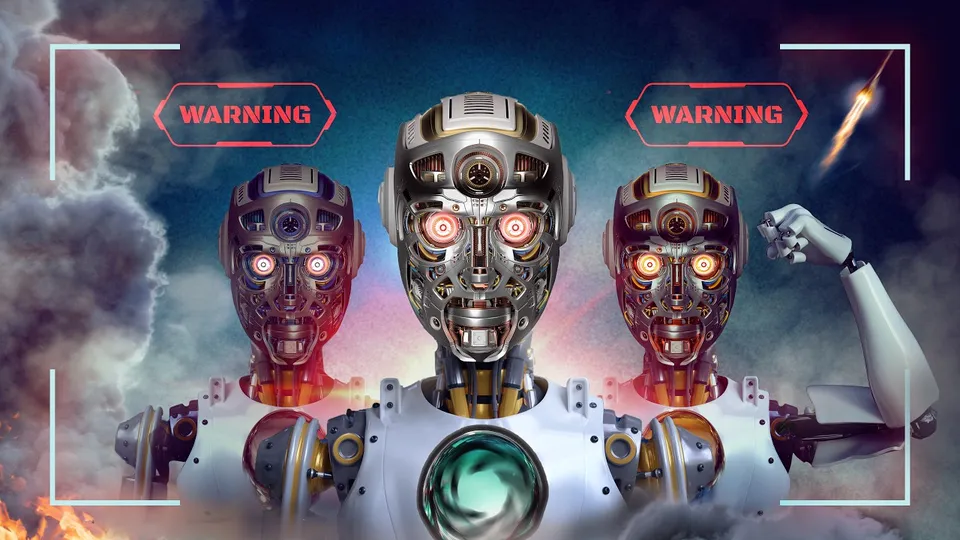
Start with: “KI außer Kontrolle? So gefährlich ist es wirklich” · MrWissen2go on YouTube
Nothing here is made for learners. MrWissen2go explains politics, history and current events to a German audience of 2.41 million subscribers, “manchmal mit Meinung”, as the channel puts it, sometimes with opinion. It is produced by funk, a joint service of the public broadcasters ARD and ZDF. Its most watched videos cover elections, the chancellor and the Epstein files. The one we picked asks how dangerous artificial intelligence really is, and runs 18 minutes.
What makes it a good first native channel is the format. One host stands in front of a plain background and speaks straight to the camera, so you can watch his mouth, and the channel wrote its own German subtitles. The vocabulary is the vocabulary of the evening news. Don’t start here before logo! feels easy.
7. Knallerfrauen: sketch comedy from everyday life (C1)
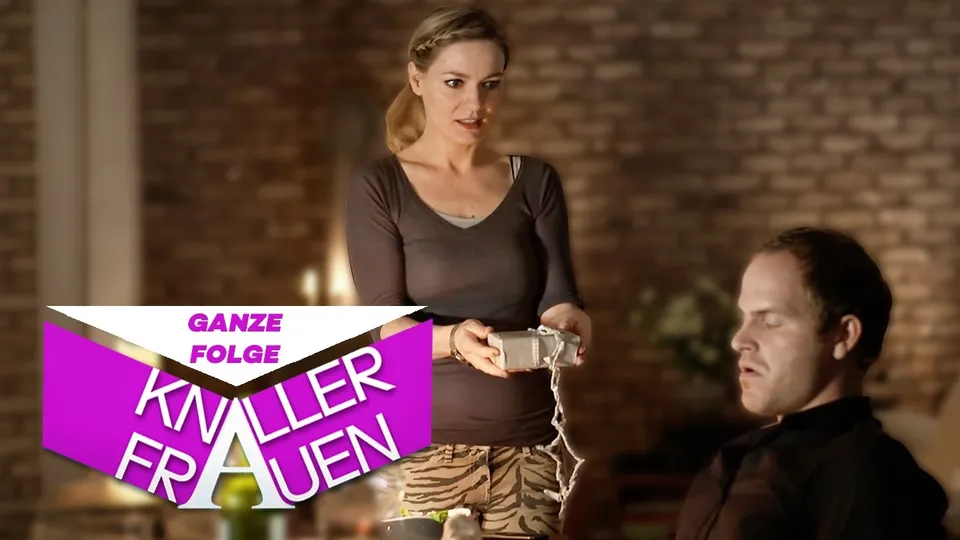
Start with: “"Bist du jetzt etwa sauer?" | GANZE FOLGE” · Knallerfrauen on YouTube
In Knallerfrauen the comedian Martina Hill plays one woman after another, a vamp, a mother, a businesswoman, in short scenes from ordinary days. The official channel has 1.68 million subscribers and posts both one-minute sketches and full episodes of about 22 minutes, the latest in November 2026. The dialogue is everyday spoken German, short and fast: “Warst du beim Friseur?” “Ja, war ich.”
This is the hardest step on the list. The German captions are automatic only, the scene changes every minute or two, and some of the jokes are rude. Lines are clipped, the way people really talk at home, and nobody slows down for you. If you can follow an episode and laugh at the right moments, you understand German the way Germans speak it to each other.
How to study with a German YouTube video
German in the background while you cook helps less than you would hope. Twenty focused minutes with one video get more done:
- Pick your level honestly. If you understand less than about half after two minutes, go one channel back on this list.
- First pass with German text. German subtitles or the German printed in the picture, not English. You want to connect the sound to the spelling.
- Second pass on the hard lines. Replay what you missed and look for the verb at the end, the article that shows the gender, the long noun that is really two or three short ones.
- Third pass by ear. Turn the text off and listen to the same part again.
- Say it out loud. Repeat three or four lines after the speaker. Long German sentences get easier once your mouth knows the rhythm.
The second pass matters most in German, because so much of the meaning sits at the end of the sentence. We go into the method in how to learn languages with YouTube. And learning German with YouTube in PlayLingo gives you a catalog of German videos sorted by level.
Watch with interactive subtitles in PlayLingo
Every channel above works in PlayLingo, and so does any other YouTube video you paste in. The app shows the German line by line under the video, with a translation into your language, which helps most with Anja, Easy German and Knallerfrauen, where YouTube has only automatic German captions. Tap a word or a phrase and Lingo explains it in that sentence: why the verb went to the end, which parts make up “Einkaufswagen”, or what “Dreckspatz” means when a mother says it. Save a phrase and it comes back for review later, together with the moment in the video where you heard it.
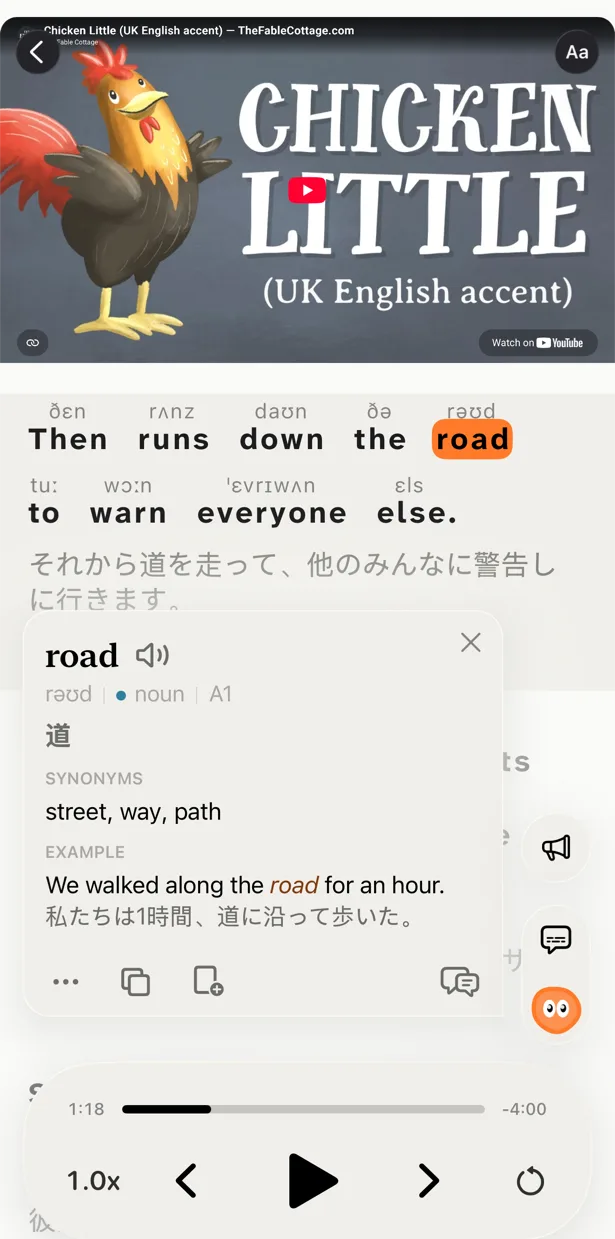
For the third pass, switch to Listen mode: the text hides, the video pauses after each line, and you can reveal a sentence word by word if you get stuck. Speak mode is for the last step: say the line aloud and watch the words light up. Build mode has you put a line back together from its pieces, which is good practice for German word order. You can also slow the video down or loop one line. PlayLingo works on iPhone, iPad, Mac and Android and is free to start, with a daily portion of practice.
Common questions
What is the best YouTube channel to learn German for beginners?
Start with Learn German with Anja if you want German explained in English from the very first word. Add Nicos Weg from Deutsche Welle as soon as you can: it is free, it covers A1 to B1, and it has subtitles in German and many other languages. Use both for a few weeks before moving on to Easy German.
How do I learn German on YouTube from scratch?
Follow the levels and watch each video more than once, first with German text, then without it. YouTube gets you far with listening and vocabulary. Most learners still use a course or a textbook for grammar alongside it, and look for speaking practice with people once they reach A2-B1.
Which German YouTubers are good for learning German?
From B2, MrWissen2go is the easiest native channel on this list: one host speaking to the camera, and German subtitles written by the channel. Knallerfrauen is for C1, with fast everyday dialogue and automatic captions only. Before B2, stay with channels made for learners or for children, like Easy German, Die Maus and logo!.
Are there YouTube channels to learn German for kids?
Die Maus is made for children, and its films come with German subtitles written by the channel. The same broadcaster, WDR, also runs Der Elefant, with short films about everyday things, though the videos we opened had no subtitles at all. Both work for adult beginners from about A2 as well.