
Korean Stories for Beginners on YouTube

Eight YouTube channels with easy Korean stories and folk tales, from A0 to B1, and what each shows on screen: Korean text, English or nothing.
Korean is slow to open up at the start. The verb comes at the end of the sentence, and the same verb changes its ending depending on when something happened and who you are talking to. A short story helps with that. The plot gives you context, the characters keep using the same handful of verbs, and endings like 가요 and 있어요 come round again and again until you stop translating them.
We went through Korean story channels on YouTube in November 2026, opened the videos and wrote down what each one shows on screen, whether the subtitles were made by the channel or by YouTube, and what level the stories really are. Some are made for learners and explain every sentence. Others are folk tales for Korean children, which turn out to be very good listening once you know a few hundred words. Eight made the list.
At a glance
- A0-A1: Immersion in Korean, akapinn 한국어
- A1-A2: ChoiSusu, Storytime in Korean
- A2: Pinkfong folk tales, yearim TV
- A1 to native, one story: Talk To Me In Korean
- B1: 팥쥐아재의 동화이야기
1. Immersion in Korean (몰입한국어): first stories with three passes (A0-A1)
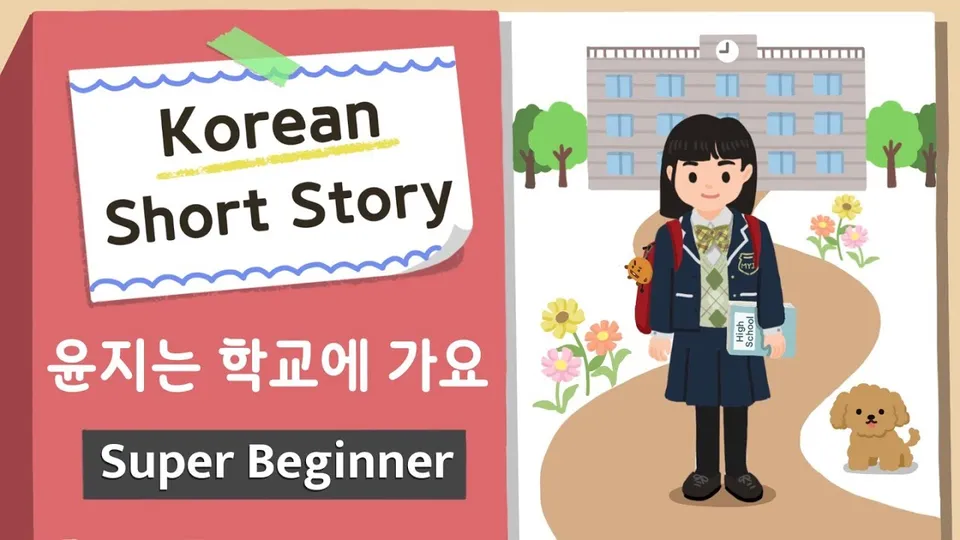
Start with: “윤지는 학교에 가요” (Yoonji Goes to School) · Immersion in Korean on YouTube
If you can read Hangul and not much else, start here. The Super Beginner stories are marked A0-A1 in every title, and each one runs about ten minutes in three parts: the story with no subtitles, the same story with Korean subtitles, then a listen-and-repeat section. In “윤지는 학교에 가요” a puppy introduces his family and tells you where everyone goes in the morning. The Korean sits in a speech bubble next to simple drawings, so a line like “엄마는 시청에 가요” comes with a picture of the bus Mom takes.
The channel made its own Korean and English subtitles, and the description links to a PDF of the script. When the beginner stories get easy, the same channel has intermediate ones marked B1-B2. In “마트에서” someone does the grocery shopping, and the description lists the useful words, from 양념 to 장바구니.
2. akapinn 한국어: a story, then every sentence taken apart (A0-A1)
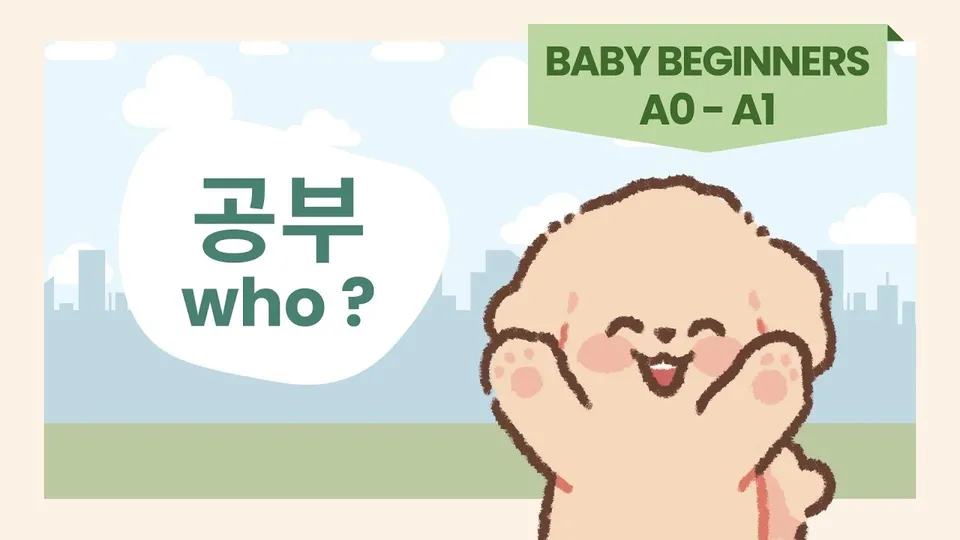
Start with: “Korean Short Story for Real Beginners [ 공부 ? : Study ? ]” · akapinn 한국어 on YouTube
A small channel with 27,800 subscribers, here because of how each video is built. First you hear a short story about 비누, a little dog, and 자피, a cat. Then the video goes back through it sentence by sentence: “간식을 사고 싶어요” appears with “snacks”, “buy” and “want” written under the right words, and the full translation below. The last part covers the grammar of the episode. In “Study?” that is -고 있어요, the future with -(으)ㄹ 거예요, and noun modifiers.
Videos run six to eight minutes. The English subtitles are the channel’s own, along with eleven other languages, while the Korean track is automatic. The channel has a second series, “Lina’s adventure in Korea”, for when Binu and Zapi feel too simple.
3. ChoiSusu (최수수): short stories in four passes (A1-A2)
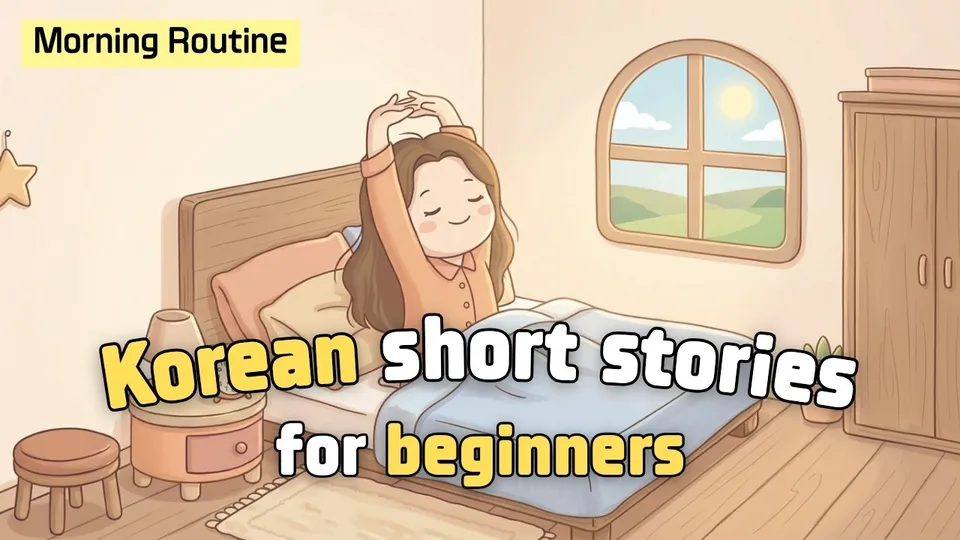
Start with: “Learn Korean through short stories: Morning routine” · ChoiSusu on YouTube
ChoiSusu has 310,000 subscribers and a beginner series of short stories that works well after the first two channels: the same idea of hearing one story several times, with four passes instead of three. Each video plays the story with no subtitles, with Korean, with Korean and English, and once more to listen and repeat. The pictures are soft illustrations with one Korean line under them, like “이제 회사에 가요” as the woman in “Morning routine” walks to work.
The Korean subtitles are the channel’s own. Other stories in the series cover hobbies, health (건강) and getting ready for a trip (여행 준비), each about eight minutes long.
4. Storytime in Korean: a cozy story with the English under it (A1-A2)
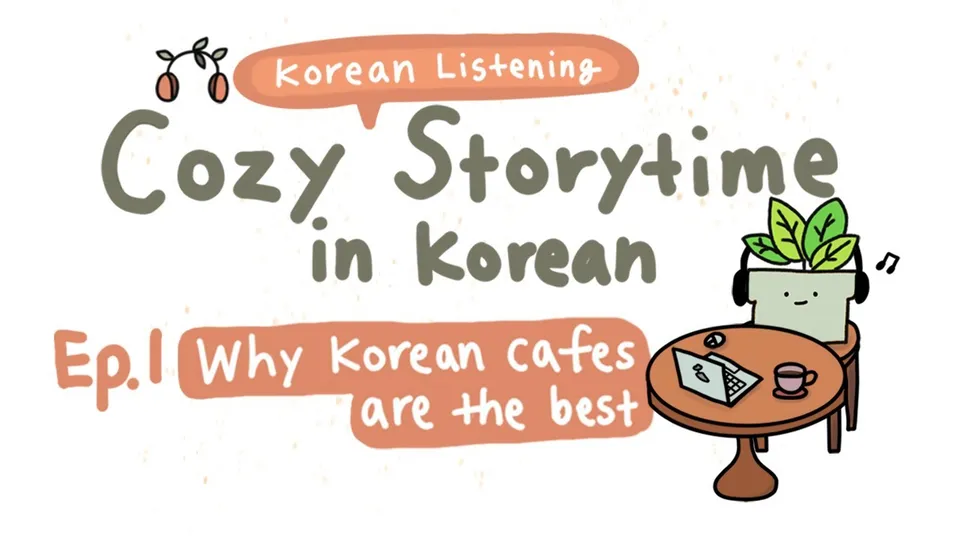
Start with: “Why Korean Cafes Are the Best” · Storytime in Korean on YouTube
These are personal stories rather than fairy tales. The host talks about everyday life in Korea in easy Korean, and every sentence appears on screen with the English right below it: “It’s three in the afternoon and I want to go to my favorite cafe.” The first episode, about why Korean cafes are so good, has more than 400,000 views and lasts four minutes. A little later comes the conclusion that every cafe owner in Korea must be a designer.
The podcast series runs to episode 17, from K-pop to staying healthy to New Year’s Day, and the last episode came out in January 2024, so treat the channel as a finished set. Subtitles in Korean and English are the channel’s own, and the first episode links a PDF to study with.
5. Pinkfong folk tales (핑크퐁 전래동화): three-minute stories every Korean child knows (A2)
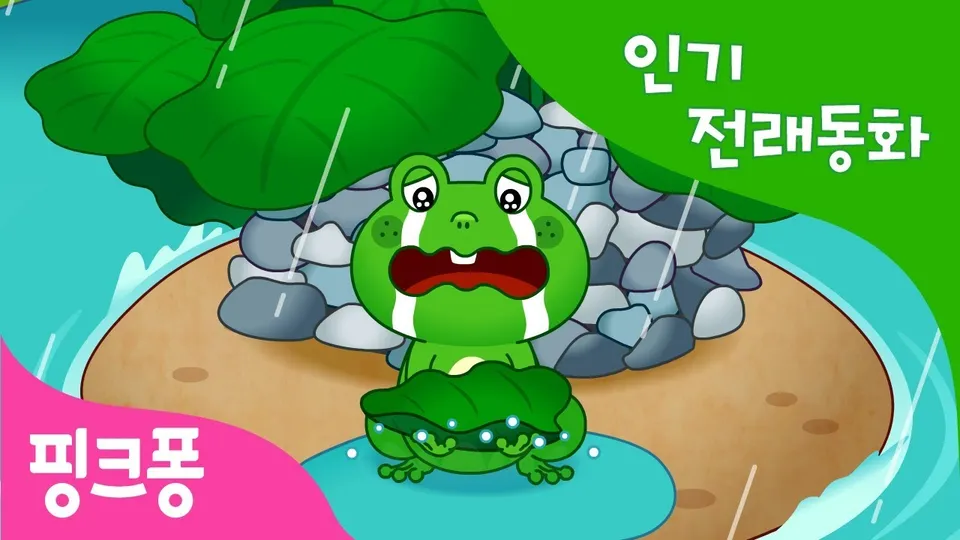
Start with: “청개구리” (The Green Frog) · Pinkfong on YouTube
Yes, the Baby Shark people. Their Korean channel has 16.7 million subscribers and a series of 전래동화, the old folk tales Korean parents read to their children. They are made for native kids, not learners, but they are short and the Korean line is written at the bottom of the screen. “청개구리”, about a little frog, runs three minutes and has more than five million views.
Expect the language of storytelling. One line in the frog story reads “조용히 하고 어서 자자꾸나”, with the old-fashioned ending -자꾸나 that you won’t meet in a textbook’s first chapters, and creatures like 도깨비, the Korean goblin, turn up in the titles. When one tale is not enough, there is an 81-minute compilation with 28 of them, from 도깨비 방망이 to 팥죽 할머니와 호랑이. The Korean subtitles are automatic.
6. yearim TV (예림TV): the classic tales, a little longer (A2)
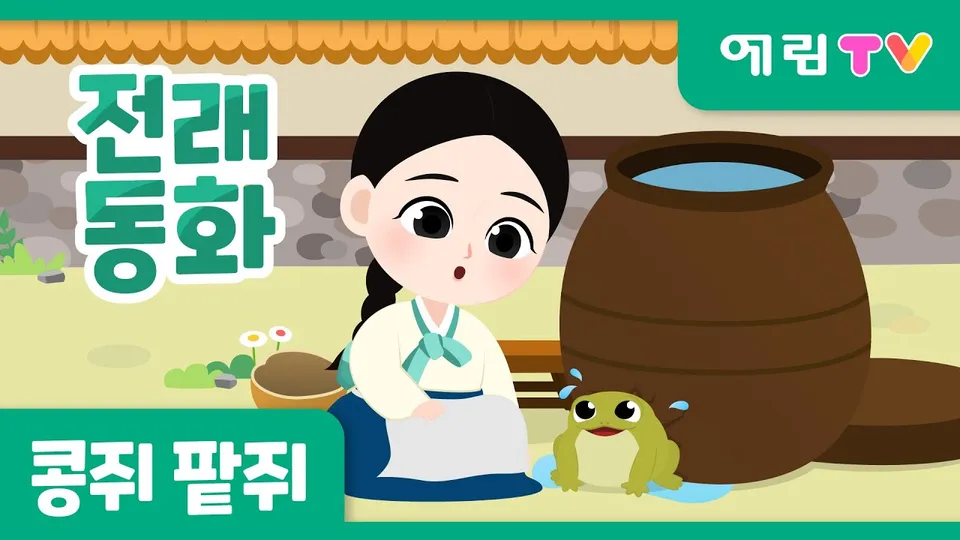
Start with: “콩쥐팥쥐” (Kongjwi and Patjwi) · yearim TV on YouTube
Another children’s channel, with 485,000 subscribers, and a good second step after Pinkfong because the tales run six or seven minutes. “콩쥐팥쥐” is often called the Korean Cinderella. Kind Kongjwi lives with a cruel stepmother and a stepsister, Patjwi. When the village holds a big feast, the stepmother leaves her with impossible chores, like filling a cracked jar with water, and animals come to help.
The narrator’s line is burned into the bottom of the picture, “며칠 뒤 마을에 큰 잔치가 열렸어요”, so you can read along even though YouTube only has automatic captions. The telling is classic storybook Korean: “살았어요”, “성격이었지요”. If you like it, 심청전 and 재주꾼 오 형제 are next.
7. Talk To Me In Korean: one story at four levels (A1 to native)
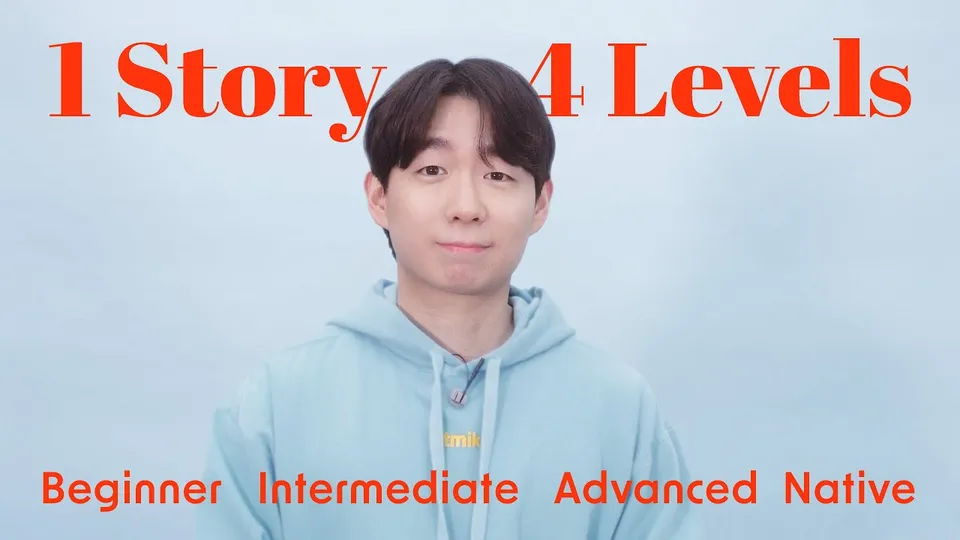
Start with: “Korean Listening Practice for ALL Levels (A Fun and Short Story)” · Talk To Me In Korean on YouTube
Under four minutes, one short story, told four times by the same teacher: Beginner, Intermediate, Advanced and Native. The beginner version comes from the TTMIK Stories reading app (the Level 1 story “안경이 어디에 있어요?”, where are my glasses), and the other three were written from it. A level badge and a timer sit in the corner, and there is no Korean text in the picture.
This is a test more than a lesson. Listen without subtitles and see where you stop following. Then turn on the Korean and English subtitles, which the channel made itself, and check what you missed. Come back in a month and see if the line has moved.
8. 팥쥐아재의 동화이야기: science told as a story (B1)
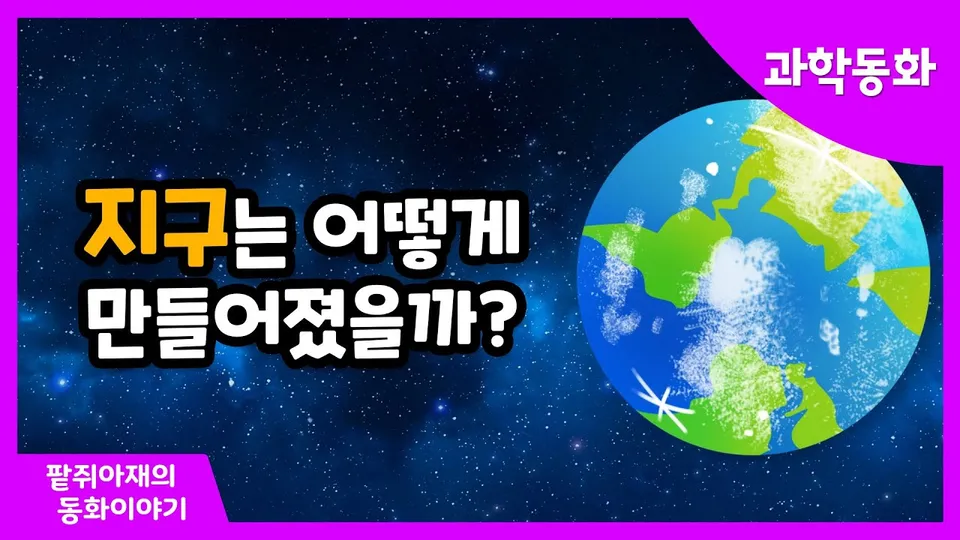
Start with: “지구는 어떻게 만들어졌을까?!” (How was the Earth made?) · 팥쥐아재의 동화이야기 on YouTube
A tiny channel, 4,400 subscribers, with a video that has 364,000 views. It tells children’s science as a story: in the first episode, 용용이 from the star Vega, 26 light years away, knows how the Earth was made and walks you through 4.6 billion years in six minutes. Other episodes ask why the dinosaurs died out, how clouds form and why space junk is more dangerous than a bullet.
It is on this list as the last step for a reason. There is no text on screen at all, just drawings, and the Korean captions are automatic. The vocabulary is about planets and billions of years, not cafes. If you can follow it, you are ready for Korean YouTube made for adults.
How to study with a Korean story
A story played once in the background mostly goes past you. Here is a routine for 15-20 minutes a day:
- Pick a story you can follow. You should get the plot on the first listen even if half the words escape you. Lost after a minute? Go one channel up the list.
- First pass: listen and read. Use the Korean on screen or the Korean subtitles. Don’t stop for every new word.
- Second pass: the lines you missed. Pause on them and check the English if the video has it. Look at the verb ending as well as the word: 가요, 갔어요 and 갈 거예요 are the same verb at three different times.
- Third pass: ears only. Hide the text and listen again. Immersion in Korean and ChoiSusu build this into the video.
- Say three lines out loud. Pick three sentences you liked and repeat them after the speaker until they sound right.
One story heard three times teaches more than three stories heard once. When the folk tales feel comfortable, our list of YouTube channels to learn Korean by level takes you from here to native videos, and learning Korean through dramas covers what to do with your favorite shows. Learning Korean with YouTube in PlayLingo gives you a catalog of Korean videos sorted by level.
Read along in PlayLingo
Every channel above works in PlayLingo, and so does any other YouTube video you paste in. The app shows the Korean line by line under the video, with a translation into your language, which matters most for the Pinkfong, yearim TV and 팥쥐아재 videos, where YouTube has only automatic captions. Tap a word or a phrase and Lingo explains it in that sentence: why it is 갔어요 and not 가요, or what 잔치 means in the Kongjwi story. Save a phrase and it comes back for review later, together with the moment in the story where you heard it.
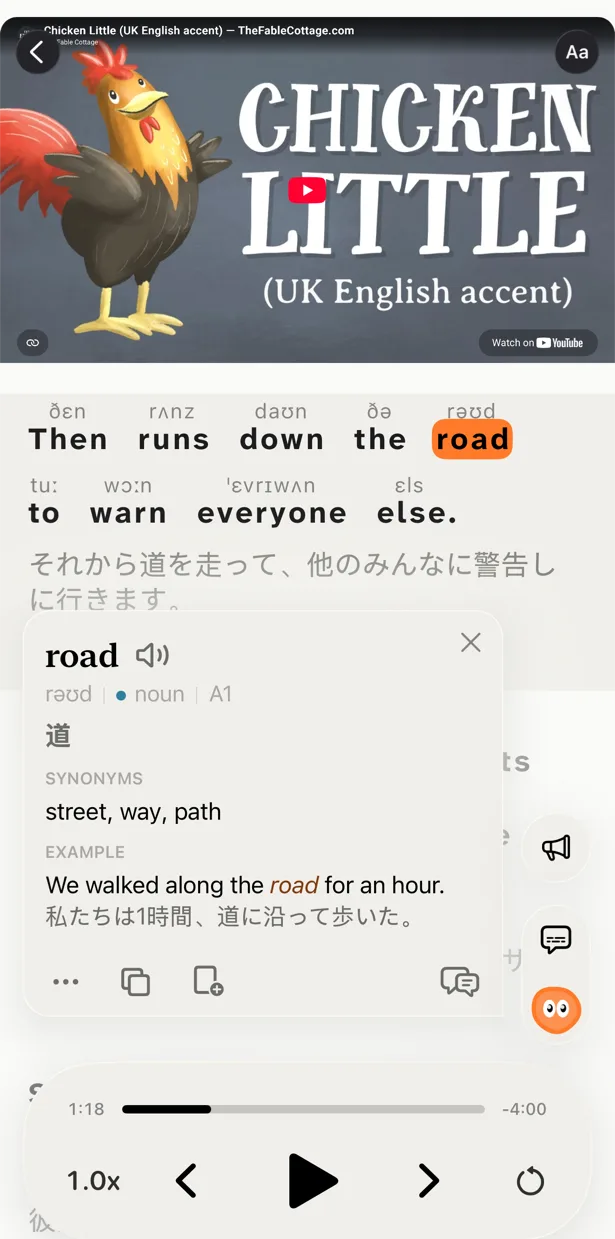
For the third pass, switch to Listen mode: the text hides, the video pauses after each line, and you can reveal a sentence word by word if you get stuck. Speak mode lets you repeat a line aloud and watch the words light up, and Build mode has you put a line back together from its pieces. You can also slow the video down or loop one line. PlayLingo works on iPhone, iPad, Mac and Android and is free to start, with a daily portion of practice.
Common questions
Where can I find Korean stories for absolute beginners?
Immersion in Korean and akapinn 한국어 both mark their stories A0-A1 and are made for people who have just learned to read Hangul. If you can’t read Hangul yet, learn it first. Every channel here assumes you can, and Go! Billy Korean from our channel list teaches it from zero.
Are there easy Korean stories with English translation?
Yes. Storytime in Korean shows the English under every Korean sentence, akapinn translates each line word by word after the story, and ChoiSusu has a pass with Korean and English together. Immersion in Korean and Talk To Me In Korean have English subtitles you can switch on.
Are Korean fairy tales good for beginners?
They are good from about A2. Folk tales like 청개구리 or 콩쥐팥쥐 are short, but they are written for Korean children, so they use storytelling endings and old words a beginner course won’t teach you in the first months. Start with the learner channels and come to the tales after.
Are there Korean short stories with audio?
Every story on this list is a video with a voice, and most have Korean text on screen or Korean subtitles from the channel. Immersion in Korean and Storytime in Korean also link a PDF of the script.